
One in Five: What Official Data Says About Enterprise AI Adoption in 2026

Headlines about artificial intelligence in business often suggest that almost every company is already using AI agents. Official statistics tell a more measured story. Government surveys on both sides of the Atlantic now put business AI use at roughly one firm in five.
This post walks through what those surveys show, how adoption differs by company size and country, and why the numbers vary so much between sources.
The European picture
Eurostat, the statistical office of the European Union, has tracked AI use in enterprises with 10 or more employees for several years. Its latest release, published in December 2025, shows that 20.0% of EU enterprises used at least one AI technology in 2025. That compares with 13.5% in 2024, 8.1% in 2023 and 7.7% in 2021.
The 6.5 percentage-point increase between 2024 and 2025 was the largest annual rise in the series. Eurostat also reports that 26 EU countries recorded higher adoption in 2025 than in the previous year.
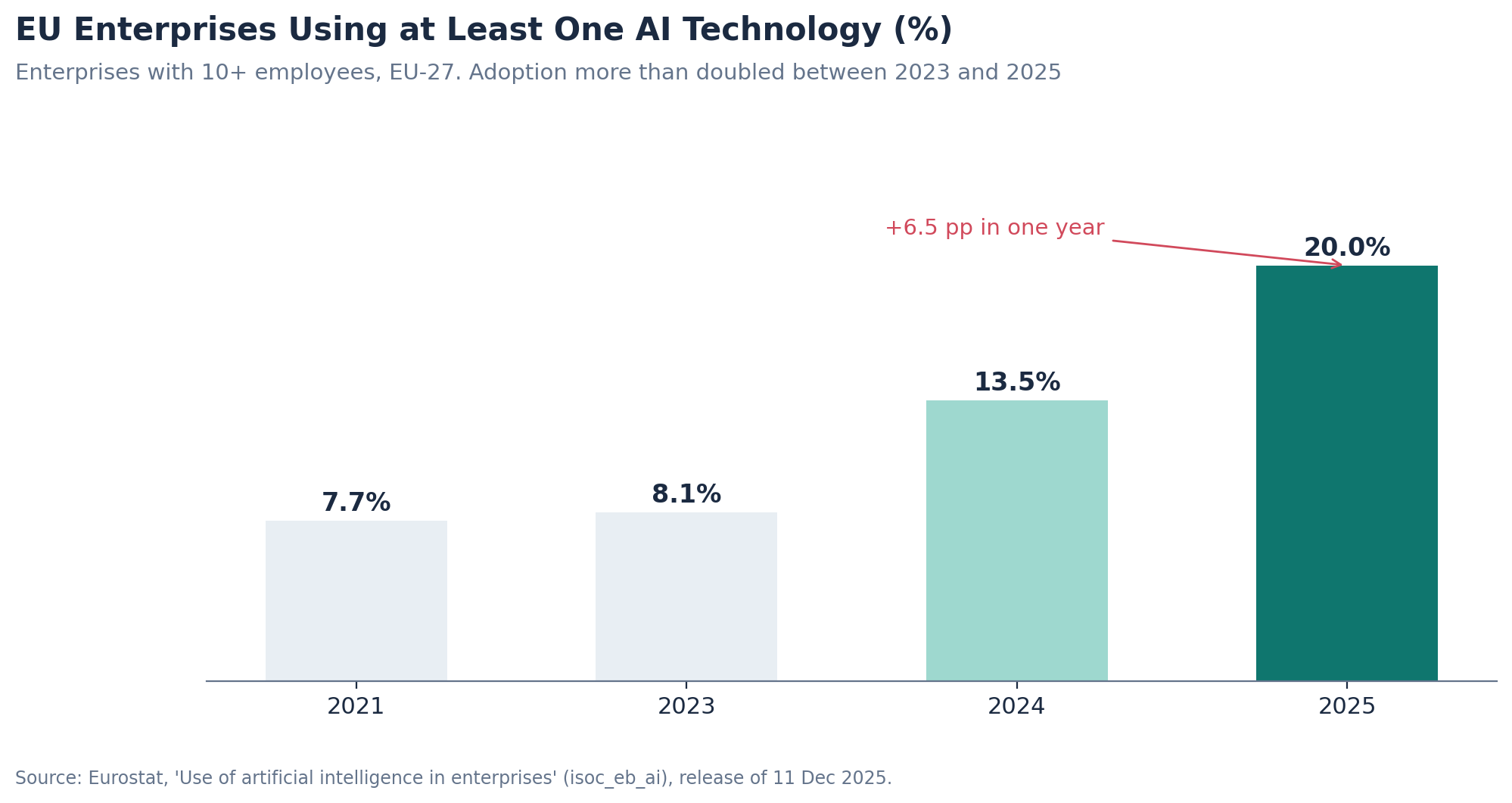
Figure 1: Share of EU enterprises using AI, 2021 to 2025. Source: Eurostat.
In 2025, the most common AI technology among EU enterprises was text mining, used by 11.75% of enterprises. AI that generates images, video, or audio followed at 9.55%, and AI that generates written or spoken language or code was used by 8.76%. These language-based technologies underpin most AI agents.
The United States picture
In the United States, the Census Bureau measures AI use through its Business Trends and Outlook Survey (BTOS), which samples about 1.2 million businesses every two weeks. Between mid-December 2025 and early May 2026, the share of businesses using AI stayed between 17% and 20%. For the period ending 3 May 2026, the rate was 19.8%. Between 20% and 23% of businesses said they expected to use AI within the next six months.
The Census Bureau broadened its AI question in November 2025 to cover use in any business function, not just in producing goods or services. Readings from before and after that change should not be compared directly.
Company size makes the biggest difference.
The clearest pattern in both regions is that larger companies adopt AI far more often than smaller ones. In the EU, 55.0% of large enterprises used AI in 2025, compared with 30.4% of medium-sized enterprises and 17.0% of small enterprises.
The U.S. data show the same shape. For the period ending 3 May 2026, 37% of firms with at least 250 employees and 32% of firms with 100 to 249 employees reported AI use. Between December 2025 and May 2026, AI use grew among firms with 20 or more employees but did not change significantly among firms with fewer than 20 employees.
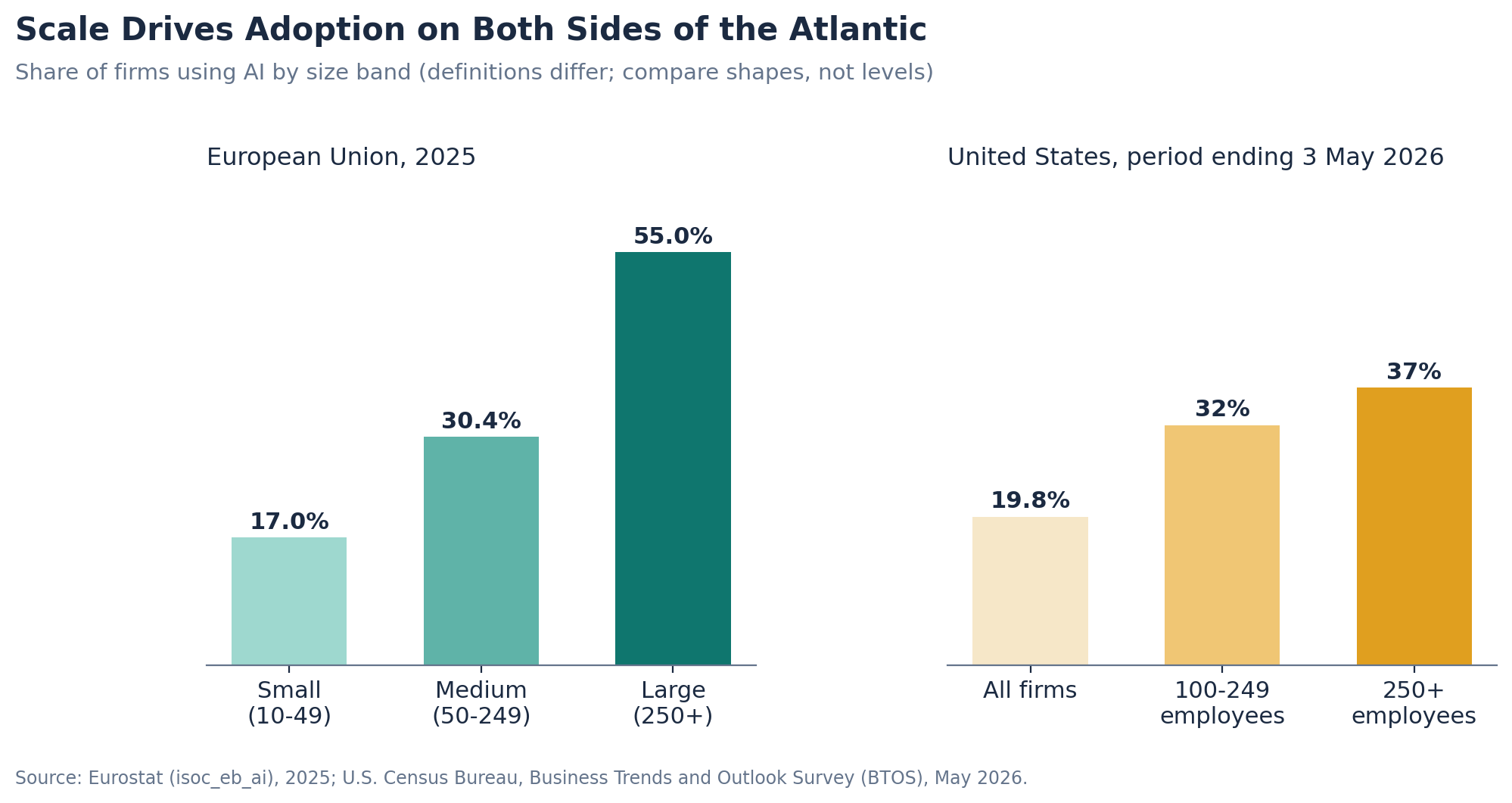
Figure 2: AI adoption by firm size in the EU and U.S. Sources: Eurostat; U.S. Census Bureau.
Large firms are also using more AI technologies at once. In 2025, 44.0% of large EU enterprises used at least two AI technologies, compared with 10.6% of small enterprises.
Big differences between countries
Adoption also varies widely within Europe. Denmark led in 2025 with 42.0% of enterprises using AI, followed by Finland at 37.8% and Sweden at 35.0%. At the other end, Romania recorded 5.2%, Poland 8.4%, and Bulgaria 8.5%. The largest increases from 2024 were in Denmark (14.5 percentage points), Finland (13.5 points), and Lithuania (12.5 points).
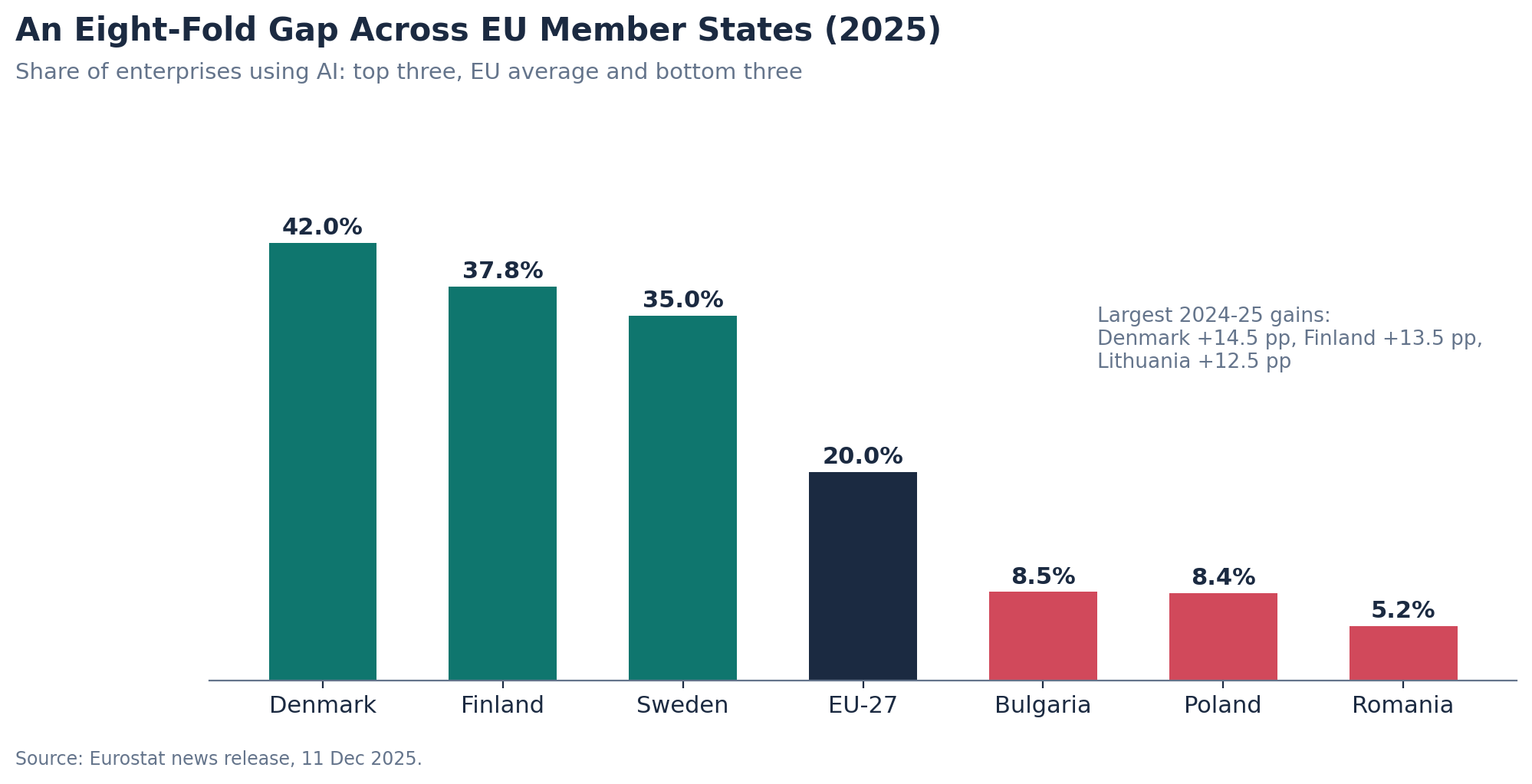
Figure 3: AI adoption in selected EU member states, 2025. Source: Eurostat.
Why different surveys give different numbers
Readers may see much higher adoption figures in other reports. A Federal Reserve note published in April 2026 explains part of the reason. It compared three U.S. surveys and found that about 18% of firms had adopted AI by the end of 2025, using the Census Bureau's measure. A separate survey of senior executives estimated that 78% of the labor force works at firms that have adopted AI. Individual-level data showed about 41% of workers using generative AI for work.
These figures measure different things. Firm counts treat a five-person business and a 50,000-person company equally, while labor-force measures give more weight to large employers, which are also the most likely to use AI. The Census Bureau's own research shows the same effect: 18% of firms used AI in a business function between November 2025 and January 2026, but the rate rose to 32% when weighted by employment.
How deep does use go?
The Census Bureau's 2026 AI supplement also shows that use within adopting firms is still limited in scope. Among U.S. firms using AI, 57% apply it in three or fewer business functions. The most common functions are sales and marketing (52%), strategy and business development (45%), and IT (41%). Two-thirds of users (66%) use AI only to augment tasks.
Key takeaways
- About one in five businesses in both the EU and the U.S. used AI in the latest official surveys.
- EU adoption rose from 13.5% in 2024 to 20.0% in 2025, the largest annual increase on record.
- Large firms adopt AI roughly three times as often as small firms in the EU.
- Adoption figures depend heavily on whether firms, workers, or employment are being counted.
The full Epignosis Insights report, Enterprise AI Agents Market Outlook: Adoption Trends Across Industries, covers these statistics, along with vendor disclosures, industry examples, and the regulatory timeline.