
DECODING GEN Z PURCHASE DECISIONS

Gen Z gets summarised in a single, tired sentence: broke, brand-disloyal, and buying everything because a TikTok told them to. The 2026 data tells a more specific and more useful story. This generation spends less in absolute terms than the ones before it, but it spends with more research, more price comparison, and more financing discipline than the stereotype allows. Retailers and brands that plan around the caricature rather than the numbers are misreading the one demographic they most need to understand.
The Spending Power Stereotype vs. the Numbers
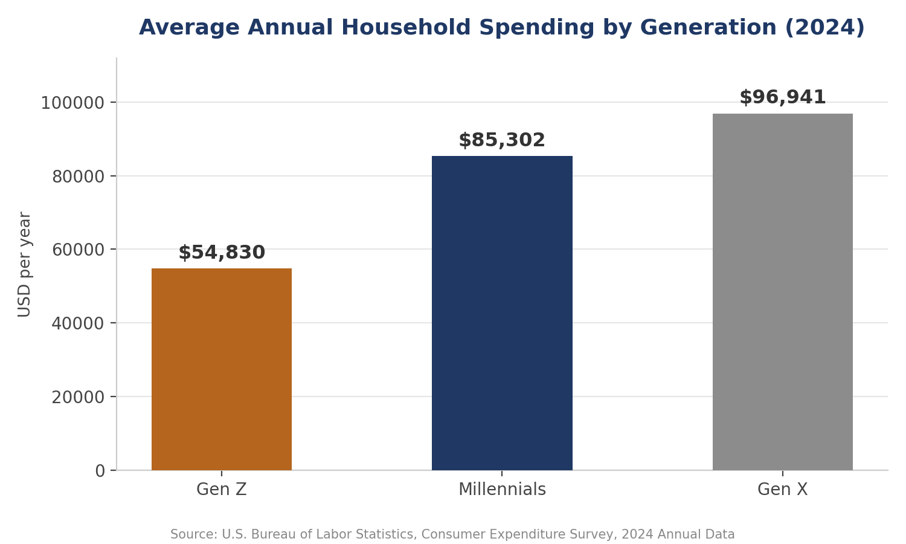
The first correction the data forces is about scale. The U.S. Bureau of Labor Statistics' Consumer Expenditure Survey found that Gen Z consumer units spent an average of $54,830 in 2024, compared with $85,302 for Millennials and $96,941 for Generation X. That gap is not a sign of indifference to money; it reflects a cohort that is younger, has fewer earners per household, and holds a shorter credit history than the generations it gets compared against. Gen Z is not spending less because it cares less about purchases. It is spending less because it is, on average, earlier in its earning life than the benchmarks it is measured against, which changes what "typical" Gen Z spending should even mean.
Digital Natives Who Still Want to Touch the Product
The second stereotype to fall is that Gen Z shops exclusively online. The "Uniquely Gen Z" study, conducted by the IBM Institute for Business Value in partnership with the National Retail Federation, surveyed more than 15,000 consumers aged 13 to 21 across 16 countries and found that 98 percent of Gen Z shop in brick-and-mortar stores at least part of the time, with 67 percent saying they shop in-store most of the time. A generation raised on smartphones has not abandoned physical retail; it has folded stores into a research-and-discovery loop that starts on a screen and often ends at a till. Brands that read Gen Z as an online-only cohort are underinvesting in exactly the physical experience this generation still shows up for.
Financially Anxious, Not Financially Careless
A third assumption, that Gen Z spends impulsively because it isn't thinking about the future, does not survive contact with Deloitte's 2026 Global Gen Z and Millennial Survey. Drawing on more than 22,500 respondents across 44 countries, the survey found that 55 percent of Gen Z respondents say they are delaying major life decisions, such as marriage or further education, because of their financial situation, even as 53 percent remain optimistic their finances will improve within the next year. That combination, present-tense caution paired with future-tense optimism, describes a generation making deliberate trade-offs under real financial pressure, not one spending carelessly because consequences feel distant.
Price Sensitivity Beats Brand Loyalty When It's Visible
Nowhere is that trade-off logic clearer than in how Gen Z responds to price itself. On its fiscal 2026 fourth-quarter earnings call, e.l.f. Beauty, which has built its business around Gen Z, Gen Alpha, and Millennial shoppers, disclosed that cutting the price of its Halo Glow Skin Tint from $18 to $14 produced a 38 percent sales lift on Amazon, a 36 percent lift across all retailers, and a triple-digit sales lift on TikTok Shop. That is not the behaviour of a demographic indifferent to cost. It is a demographic that responds immediately and measurably to value, provided the value is visible on the exact platform where the purchase decision gets made.
Credit Card Skeptics, Installment Believers
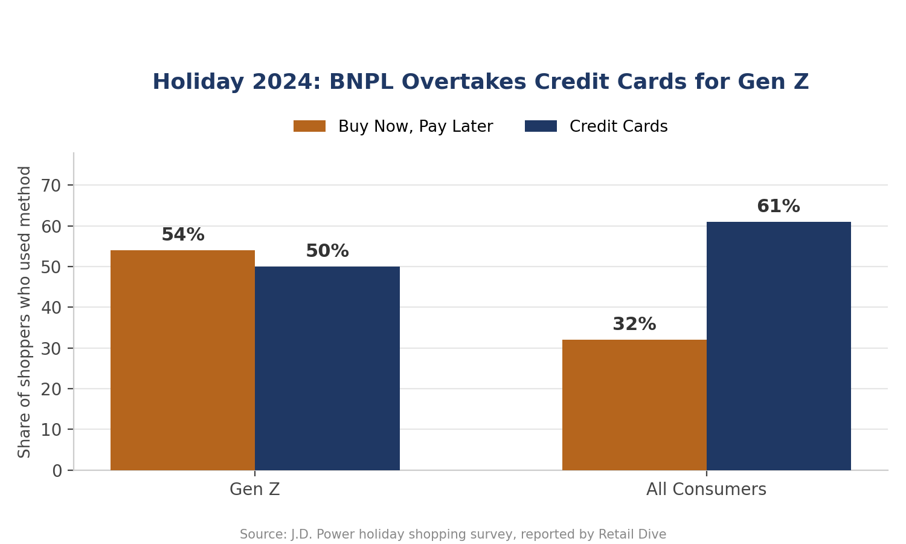
The clearest evidence against the "careless spender" stereotype comes from how Gen Z chooses to pay. A J.D. Power holiday shopping survey, reported by Retail Dive, found that during the 2024 holiday season 54 percent of Gen Z shoppers used buy now, pay later services, compared with 50 percent who used credit cards, the first time BNPL had overtaken credit cards for this age group in the survey's history. Among all consumers, the pattern reversed, with only 32 percent using BNPL against 61 percent using credit cards. Gen Z is not avoiding structure around its purchases; it is choosing a different structure, one with fixed instalments and no revolving interest, over the open-ended debt a credit card represents.
What the Stereotype Gets Wrong
Put together, the 2026 data describes a generation that spends less because it earns less, shops in physical stores more than assumed, delays major decisions under financial pressure while staying cautiously optimistic, reacts sharply and visibly to price cuts, and prefers fixed-instalment financing over open-ended credit. None of that is reckless. It is a highly rational response to a cohort's specific financial starting point, and brands that build strategy around the caricature rather than this pattern will keep misjudging the one generation whose purchasing habits are shaping every retail category built around them.