
Crystal Clear: Why BOPS Sheet Remains a Packaging Favourite for Food and Pharma
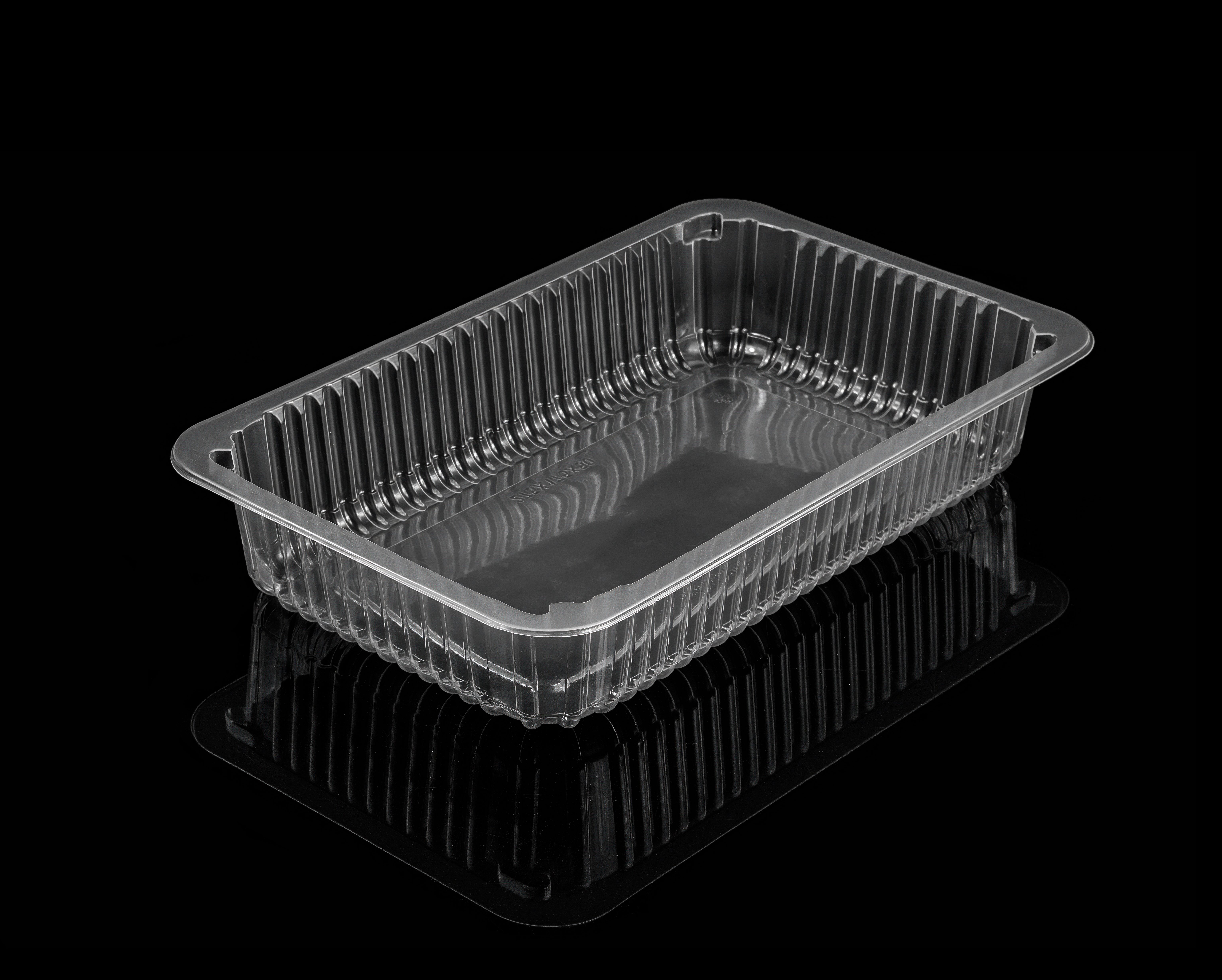
Walk through any supermarket bakery or deli counter and you will see it: crystal-clear clamshells holding croissants, salads, berries and desserts. Many of these containers are made from biaxially oriented polystyrene, or BOPS, sheet. Despite growing competition from other plastics and increasing scrutiny of polystyrene, BOPS continues to grow. Epignosis Insights estimates the Global BOPS Sheet Market at US$1,211.6 million in 2025, rising to US$2,001.5 million by 2032, while volume grows from about 595.9 kilotons to about 982.9 kilotons.
What Makes BOPS Special
BOPS is made by extruding polystyrene and stretching it in two directions. This biaxial orientation transforms brittle polystyrene into a tough, stiff, glass-clear sheet that can be thermoformed into thin-walled containers at high speed.
For converters and brand owners, BOPS offers several advantages. Its low density means more sheet area per kilogram than PET, so more containers can be produced from each tonne of material. It thermoforms at lower temperatures and faster cycle times, saving energy and increasing output. Its stiffness allows thin gauges while maintaining rigidity, and its clarity and gloss make products look fresh and appealing.
Food Packaging: The Core Market
Food packaging is by far the largest application, valued at US$722.2 million in 2025, or 59.6% of the market, and projected to reach US$1,183.6 million by 2032. Bakery products, fresh produce, salads, sushi, confectionery and ready meals all rely on transparent packaging that lets shoppers see what they are buying.
The growth of supermarkets, convenience stores and food delivery platforms, particularly in Asia, is expanding demand. Anti-fog BOPS sheets, valued at US$71.9 million in 2025, prevent condensation inside chilled containers, keeping products visible in refrigerated displays. Heat-resistant sheets, valued at US$165.8 million, enable containers for warm and microwaveable foods.
Pharmaceutical Packaging: Precision and Protection
Pharmaceutical packaging is the second largest application, valued at US$245.1 million in 2025 and growing at 8.1% to US$421.0 million by 2032. BOPS is used for blister packs, trays and inserts that protect and organise medicines, syringes and medical devices. Pharmaceutical applications demand consistent gauge, high clarity and strict quality control, supporting demand for higher-specification sheets.
Electronics: The Fastest Growing Application
Electronics packaging is the fastest growing application, rising from US$173.9 million in 2025 to US$304.0 million by 2032 at an 8.4% CAGR. BOPS trays and clamshells protect electronic components and consumer devices during manufacturing, storage and transport. Heat-resistant and specialty grades, including antistatic variants, are particularly important in this segment.
The Price Ladder
BOPS prices vary significantly by grade. Transparent sheets average about US$1.80 per kilogram, opaque and coloured sheets about US$2.10, coated sheets about US$2.30, anti-fog sheets about US$2.50, heat-resistant sheets about US$2.70 and UV-resistant sheets about US$2.80. The blended average across the market is about US$2.03 per kilogram.
This price ladder matters for producers. Transparent sheets represent about 51% of market value but about 58% of volume. Specialty sheets generate more revenue per tonne, which is why producers are investing to expand their specialty portfolios.
The Sustainability Question
BOPS faces real challenges. Regulators in several regions have restricted polystyrene foam food containers, and polystyrene recycling rates remain low in many markets. PET, which offers similar clarity and broader recyclability in many systems, competes strongly, particularly in Europe.
Yet polystyrene has a potential advantage in recycling: it can be broken down efficiently into its styrene monomer through depolymerisation and then repolymerised into new material. If collection and advanced recycling scale up, recycled-content BOPS could help the material meet circular economy expectations.
Where Demand Is Growing
Asia Pacific is the largest and fastest growing region, valued at US$598.6 million in 2025 and growing at 8.3% a year. The region combines large polystyrene production capacity with fast-growing food service, fresh produce exports and electronics manufacturing. North America, valued at US$303.8 million, grows at 7.5%, supported by strong bakery, deli and produce packaging demand. Europe grows more slowly at 6.6%, reflecting tighter rules on single-use plastics and stronger competition from PET.
What Converters Should Consider
For thermoformers choosing between BOPS and alternatives, the decision depends on product requirements, equipment, customer sustainability targets and local regulations. BOPS remains highly competitive for lightweight, high-clarity, high-volume applications. Where recycled content or specific recycling streams are required, PET or recycled PET may be preferred. Many converters run both materials to serve different customer needs.
The Bottom Line
BOPS sheet remains a packaging favourite because it delivers clarity, stiffness and efficiency at low weight and cost. With food packaging providing a large and growing base, and pharmaceutical and electronics packaging driving specialty demand, the market is set to grow at 7.5% a year to reach US$2.0 billion by 2032. Its long-term success will depend on how effectively the industry addresses recycling and sustainability.