
Why Food Plants Are Automating Faster Than Ever
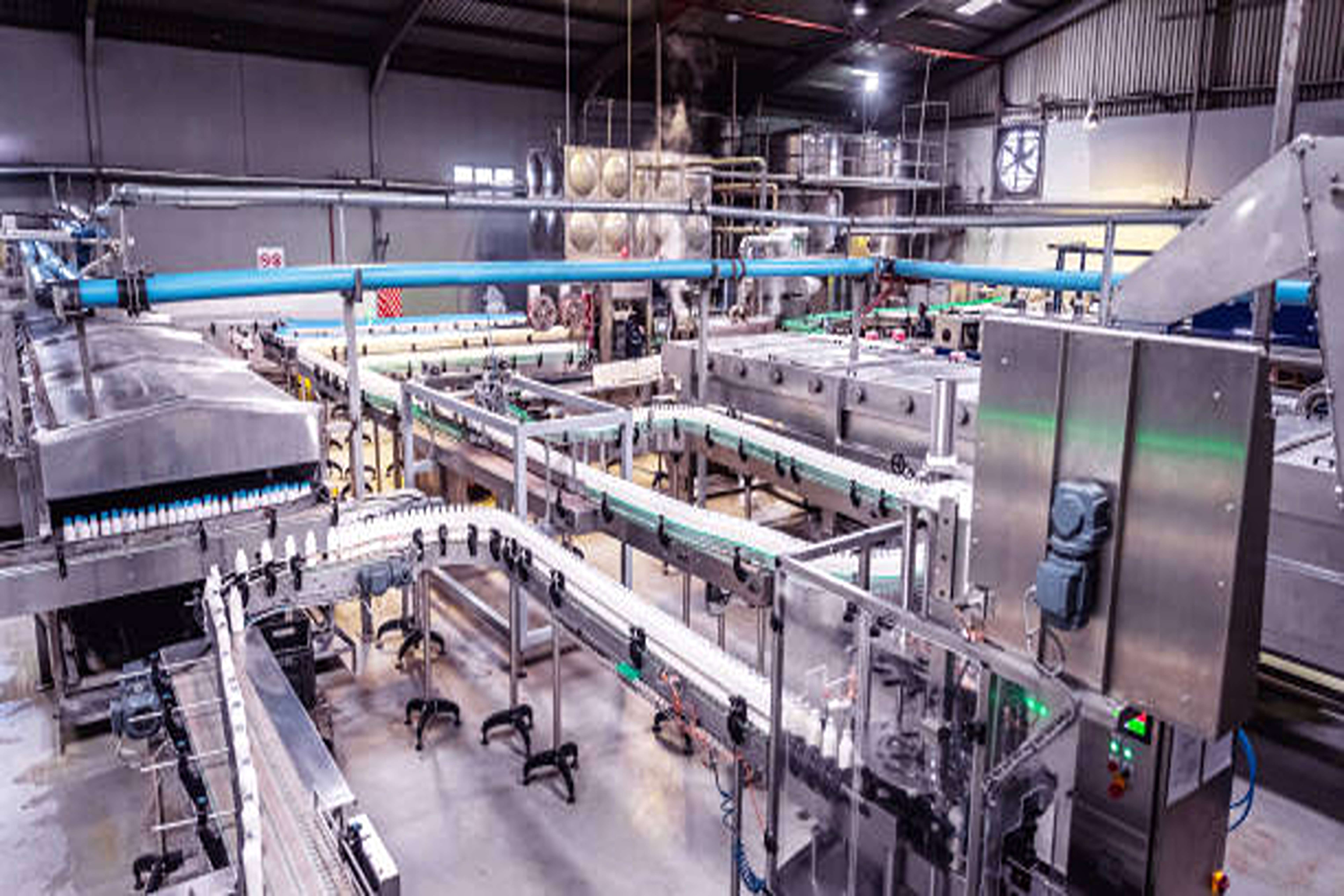
Walk into almost any food processing plant today, and you'll see something that would have looked unusual a decade ago: robotic arms palletizing cases, vision cameras scanning for defects, and sensors quietly logging temperature and time at every step. This shift isn't cosmetic. It reflects a genuine structural change in how food gets made, and it's happening because three pressures are converging at once: a shrinking workforce, tightening food safety regulation, and automation hardware that finally costs little enough for mid-size producers to justify.
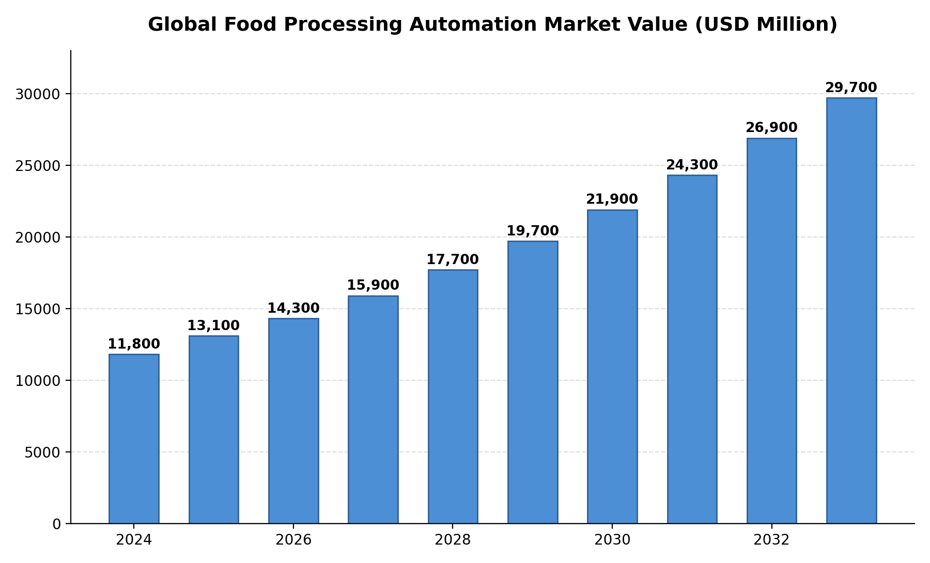
The numbers back this up. The food processing automation market is valued at approximately USD 14.3 billion in 2026. It is on track to reach around USD 29.7 billion by 2033, an approximate 11% compound annual growth rate that comfortably outpaces general food and beverage capital spending growth of roughly 3% a year. That gap matters: it tells us automation isn't simply riding the industry's normal investment cycle; it's diverting budget from other priorities because the underlying case has become too compelling to ignore.
The Labor Problem Isn't Going Away
Start with the workforce. International Federation of Robotics data shows U.S. industrial robot installations rose roughly 11% in 2025 to about 38,000 units, and food industry adoption specifically jumped around 30% as processors struggled to keep lines staffed. That's not a coincidence. Food manufacturing has one of the oldest workforces of any industry; a large share of production workers are 55 or older, and as they retire, younger workers are choosing warehousing, logistics, and retail roles that pay similarly but come with more flexible schedules and less physically demanding work.
For plant managers, this isn't an abstract HR trend; it's a daily scheduling headache. When you can't reliably staff a shift, automating the hardest-to-fill, most repetitive roles stops being a nice-to-have efficiency project and becomes the only way to hit planned output. That's the real engine behind the adoption numbers above.
Regulation Is Raising the Baseline
At the same time, food safety rules are quietly pushing every processor toward more automated data capture. The FDA's Section 204 traceability rule requires processors handling high-risk foods to record and share detailed supply chain data so contaminated products can be traced and pulled quickly. Paper logs and manual spreadsheets can't keep pace with that requirement at scale, especially once multiple suppliers, co-packers, and distribution points are involved in a single product's journey. Processors evaluating where to start are increasingly turning to a full food-processing automation market analysis to benchmark their plant against industry investments.
In the European Union, the recast Machinery Regulation is doing something similar for automated and robotic equipment itself, tightening safety, cybersecurity and documentation requirements that vendors must now design in from the outset rather than bolt on afterward. Put together, U.S. and EU rules are converging on the same conclusion: connected sensors, automated monitoring, and software that can produce audit-ready records on demand are becoming the baseline expectation, not a premium feature.
Where the Adoption Gap Is Widest
Not every part of a food plant is automating at the same pace. Beverage lines, with their standardized containers and fill volumes, lead penetration because fixed automation suits them well. Meat, poultry, and seafood processing follows closely, driven less by cost savings than by the sheer physical toll of cutting and deboning. Fruit and vegetable processing lags furthest behind, simply because natural product variability- no two apples are quite the same shape- has historically been hard for machines to handle. That gap is closing fast as machine vision and AI inspection get cheaper and more capable, which is exactly where the next wave of investment is heading.
What This Means for Processors
If you're weighing an automation investment right now, the market data suggests timing works in your favor on two fronts. First, technology that used to be exclusive to large multinational processors- collaborative robots, AI vision, cloud-based monitoring- has become accessible enough for mid-size plants. Second, the regulatory direction of travel means that investments in automated data capture and monitoring will continue to pay compliance dividends well beyond their original labor-saving business case. Processors that treat automation purely as a headcount-reduction tool are underselling what it can do; the strongest returns come from combining labor savings with yield improvements, quality consistency, and lower compliance risk in a single project.
Getting Started Without Overcommitting
None of this means every plant needs a full-line overhaul this year. The processors seeing the best results tend to start narrow: pick the single station where labor turnover, safety incidents or quality variance are worst, and automate that first with a clearly defined payback target. A single palletizing cell or vision-guided inspection station generates real operating data- throughput, downtime, defect rates- that makes the next investment decision far easier to justify internally than a broad modernization plan built on assumptions. It also gives maintenance and operations staff time to build automation-adjacent skills before a larger rollout, which directly addresses the technician shortage that trips up many first-time automation projects. Once that first cell is proven, scaling line by line, informed by real plant data rather than a vendor's general sales pitch, tends to produce a much stronger multi-year return than committing to a single large capital project upfront.