
Beyond Silicon: How GaN Semiconductors Are Redefining Cost, Performance, and Competitive Advantage Across High-Power Electronics
For two decades, the pitch against gallium nitride was simple: it performs better than silicon, but it costs too much to matter outside niche RF and defense budgets. That argument is losing its footing fast, and the shift shows up everywhere analysts look at the Global gallium nitride semiconductor market. GaN has now reached price parity with silicon in consumer-scale power electronics, and the wide-bandgap category as a whole is following a cost curve that once seemed impossible. The companies that internalize this early are the ones setting the design standard in EV power electronics, data center PSUs, and industrial motor drives before their competitors even update their bill-of-materials assumptions.
Vertical GaN: The Architecture Shift That Actually Moves Cost
Most of the last decade's GaN devices were lateral current running across the surface of the chip. That design capped how far cost and performance could improve together. Vertical GaN, which lets current flow through the bulk of the material instead, changes the economics rather than just the specs: high-end power systems built on vertical architecture cut energy loss by nearly half and shrink passive-component size by roughly 50%, with device volume dropping to about a third of equivalent lateral designs. That combination less material, fewer passives, smaller enclosures is exactly the kind of structural cost reduction that's reshaping competitive positioning across the Global gallium nitride semiconductor market, because it attacks bill-of-materials cost and performance at the same time instead of trading one for the other.
The Wafer-Size Race Is a Direct Cost Lever
Chip yield per wafer is one of the least glamorous and most decisive variables in semiconductor economics, and it's currently the sharpest edge companies have. Infineon's move to 300mm power GaN production delivers a 2.3x higher chip yield compared to competitors still running 200mm lines a yield advantage that translates directly into lower per-unit cost without touching device performance at all. This is the kind of capital-intensive bet that only a handful of players in the Global gallium nitride semiconductor market can currently make, and it's quietly widening the gap between companies that can manufacture at scale and companies that are still buying wafer capacity from someone else.
Where the Cost Case Is Already Won: Data Centers and EV Chargers
The clearest proof that GaN's economics have changed isn't in a lab spec sheet it's in what buyers are actually deploying. A data center swapping silicon power supply units for GaN equivalents can save roughly $1 million a year in cooling costs per 10MW of load, a number large enough to change procurement decisions on its own. EV fast chargers built on wide-bandgap components have shrunk from refrigerator-sized cabinets to wall-mounted units, cutting installation cost alongside device cost. These are the use cases pulling the Global gallium nitride semiconductor market toward maturity fastest, because the payback period is measured in a single budget cycle rather than a multi-year technology bet.
Industrial and Renewable Energy: The Quieter Third Front
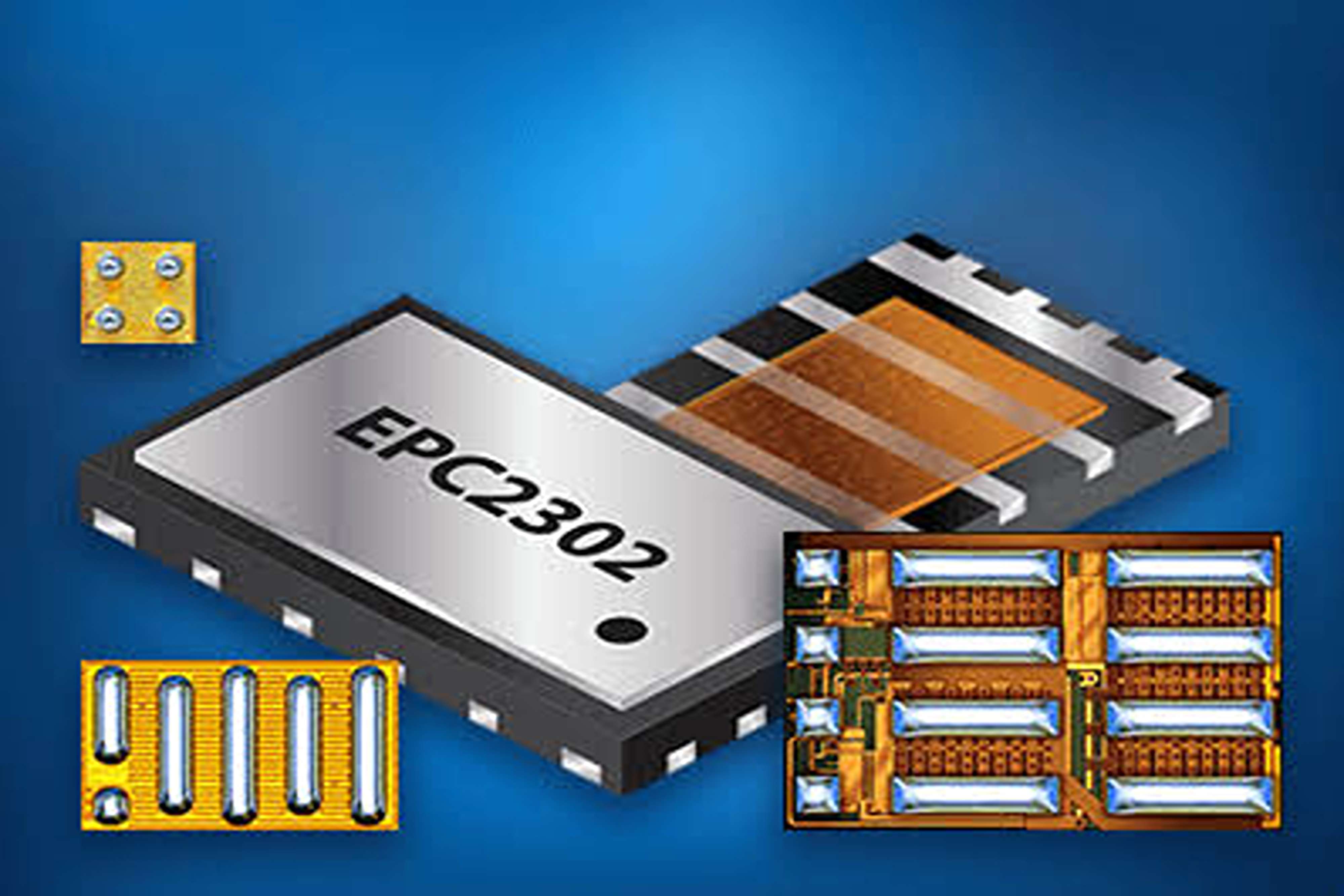
Data centers and EVs get the headlines, but industrial motor drives and renewable inverters are becoming a durable third growth engine, expected to reach roughly 11% of the power GaN market by 2030. Enphase Energy's GaN-based micro-inverter was an early proof point for the photovoltaic segment, and adoption in battery storage and portable power systems is following the same path. EPC's eGaN FETs now hold 97% efficiency at 250kHz switching frequency, enabling 800W per phase versus roughly 600W per phase for comparable silicon designs limited by inductor current constraints. For industrial buyers, that's not an incremental spec bump it's the difference between needing one power stage or one and a third, which is exactly the kind of unit-economics argument that's pulling conservative industrial buyers into the Global gallium nitride semiconductor market for the first time.
What Still Separates Winners From Followers
● Wafer scale: 300mm capacity is currently a competitive moat, not an industry baseline most suppliers are still on 200mm or smaller.
● Vertical integration: companies that control epitaxy, device design, and packaging capture more of the cost reduction than those buying wafers on the open market.
● Application-specific qualification: automotive and grid-scale customers require reliability testing cycles that take years, so early qualification wins are difficult for later entrants to unwind quickly.
The Bottom Line
The competitive story in power electronics right now isn't "GaN versus silicon" in the abstract it's which suppliers reached cost parity fast enough to lock in design wins before the next generation of products gets specified. Vertical architecture, larger wafers, and falling per-unit costs have turned what used to be a performance premium into a genuine cost-and-performance combination, and that combination is what's actually driving the Global gallium nitride semiconductor market rather than efficiency claims alone. The companies still treating GaN as a premium niche material are, in practical terms, competing with one hand tied behind their back against rivals who've already redrawn their cost structure around it.