Why Cold Brew and Protein Coffee Are Rewriting the RTD Coffee Playbook
Ready-to-drink coffee used to mean one thing: a sweet canned latte grabbed on the way to work. That definition is gone. In 2026, the category is being pulled in two directions at once: colder and more functional, and both shifts are changing what brands need to put on shelf to win. The pace of change is no longer incremental; it is now showing up in national consumption surveys, retail sales data, and product launch calendars simultaneously, a rare alignment for a beverage category this size.
Cold Is No Longer Seasonal
For years, iced and cold coffee formats spiked in summer and faded in winter. That pattern is breaking down. National Coffee Association (NCA) data from its Spring 2026 survey fielded in the dead of winter found that cold or iced formats still accounted for 17% of all past-day cups of coffee. Cold brew specifically has become a habit rather than a novelty: past-week cold brew consumption is up 31% since 2025, with Gen Z and Millennial drinkers driving most of that growth.
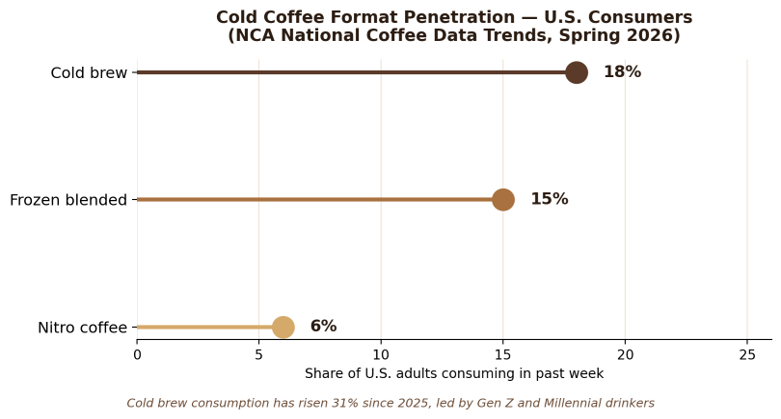
Frozen blended coffee (15% past-week penetration) and nitro coffee (6%) round out the cold lineup, but cold brew's lead and its growth rate make it the format retailers and manufacturers are prioritizing for new SKUs and shelf space. The same NCA report found that specialty coffee, a bucket that includes espresso-based drinks and non-espresso cold formats such as cold brew and ready-to-drink coffee, has now overtaken traditional coffee in past-day consumption, at 47% versus 42%. Cold espresso-based beverages alone reached 38% weekly penetration, up six percentage points year over year, led by cold lattes at 17% and cold mochas at 11%. That is not a niche shifting the market; it is the market shifting toward cold.
Protein Is the New Flavor War
The second shift is functional. Circana's 2026 beverage research found that 64% of consumers sometimes treat a drink as a snack or meal replacement, rising to 70% among 25–34-year-olds. RTD coffee brands are moving fast to meet that behavior. Starbucks has expanded its Coffee & Protein RTD line into supermarkets after first testing the format in its own stores, and its EMEA beverage team has said protein cold foam is now selling nearly as well as flat whites in some markets, a notable claim given how dominant flat whites already are on café menus.
Danone has gone further, adding a coffee variant to its Oikos Protein Shakes range: a Mocha Latte flavor with 95 milligrams of caffeine, roughly what you'd get from a standard brewed cup, alongside protein and fiber. This “profee” positioning isn't a side project. Danone describes its Oikos protein line as a top-growing RTD product, sitting within a functional RTD segment that industry sources value at roughly $9.7 billion and growing at nearly 17% annually, a rate that outpaces most other corners of the broader ready-to-drink coffee category.
Why At-Home Consumption Makes This Bigger
One reason this shift matters more than a typical flavor trend is that it reflects where people are actually drinking coffee. NCA data show that 85% of past-day coffee drinkers consumed their coffee at home in the most recent survey, the highest figure recorded since 2012. That means the primary battleground for cold brew and protein-fortified coffee is not the café counter but the refrigerated aisle of the grocery store, which rewards exactly the kind of shelf-stable, ready-to-drink formats that Starbucks, Danone, and their competitors are racing to stock.
What This Means for Brands
- Cold brew and nitro deserve permanent shelf space, not a seasonal rotation; consumption no longer drops off in winter.
- Protein and functional claims are becoming a genuine differentiator, not a niche add-on, especially with health-conscious and GLP-1 consumer segments.
- Younger consumers (Gen Z, Millennials) are the clearest growth engine and respond to both cold format innovation and nutritional positioning.
- At-home consumption dominance means grocery and e-commerce merchandising matters as much as, or more than, café-driven brand halo.
For a full breakdown of category size, pricing, and the competitive landscape, see our ready-to-drink coffee market analysis.