
The Rise of Luxury Resale: From Threat to Strategy
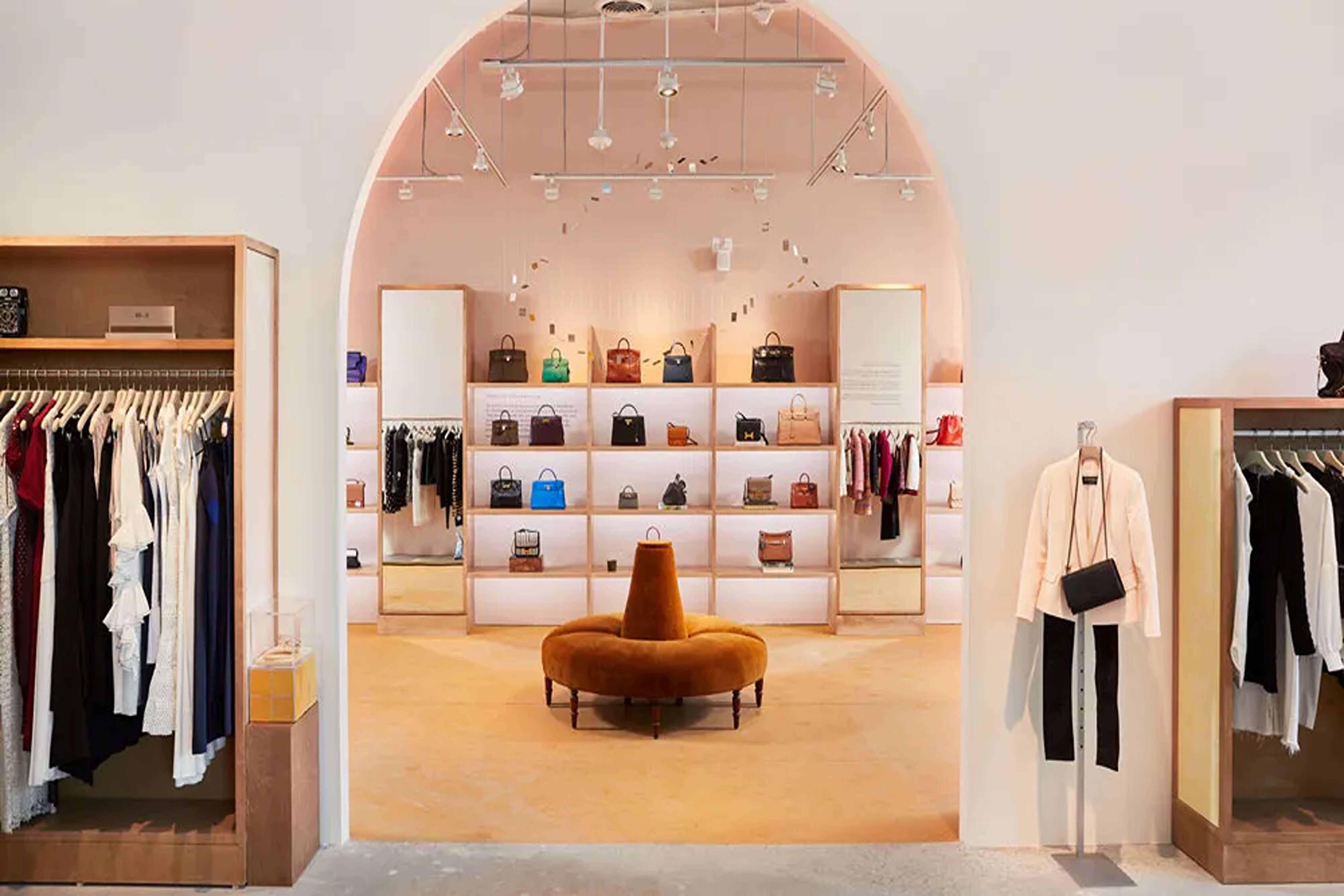
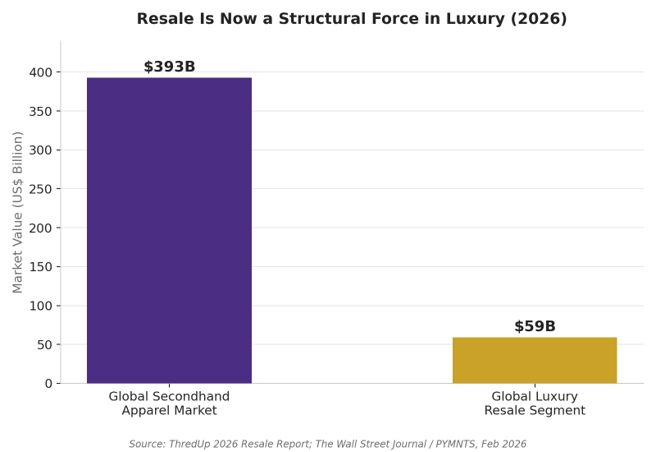
For most of the last decade, luxury brands treated the resale market as an uninvited guest at best and a legal adversary at worst. Chanel, for instance, has pursued litigation against resellers over authentication and marketing practices. In 2026, that posture is becoming increasingly untenable. The global secondhand luxury goods market grew to approximately $59 billion in 2025 and is now growing faster than the primary luxury market, according to industry reports on 2025 data.ThredUp's 2026 resale report puts the broader global secondhand apparel market at roughly $393 billion, with the luxury resale segment alone estimated at $41.6 billion and climbing. Business of Fashion's State of Fashion 2026 research, produced with McKinsey, forecasts that secondhand luxury will grow at two to three times the rate of the first-hand market between 2025 and 2027.
These are not niche numbers anymore. A September 2025 J.P. Morgan Global Research survey found that 60% of consumers across the U.S. and Europe now use resale platforms to purchase secondhand luxury goods, a figure that signals resale has moved from a fringe behavior to a mainstream shopping habit well before most brand strategies caught up.
Why Brands Are Changing Their Stance
The shift from litigation to what industry reporting describes as an “uneasy truce” is driven by simple economics: resale is no longer a side channel; it's a parallel market that captures value whether or not the originating brand participates. A luxury handbag or watch that retains 60–70% of its original value on the resale market effectively advertises the brand's quality and durability every time it's traded. Still, if the brand isn't part of that transaction, it captures none of the commercial upside and has limited ability to police authenticity or brand presentation.
This economic logic is now showing up directly in company behavior. Deloitte's Global Powers of Luxury 2026 survey of 420 senior executives found that circular-economy adoption inside luxury companies has moved well past the pilot stage: 68.3% now offer repair or refurbishment services, 53.8% operate certified pre-owned or trade-in programs, and 44.5% partner directly with resale platforms such as The RealReal, Vestiaire Collective, or Fashionphile.
Regulation Is Accelerating the Shift
Consumer demand isn't the only force pushing brands toward circularity; regulation is moving in the same direction, and faster than many companies expected. Baker McKenzie's March 2026 cross-jurisdictional ESG analysis, produced with Positive Luxury, found that regulators across Europe, the U.S., Asia-Pacific, the Middle East, and Latin America are converging on more prescriptive, operational sustainability requirements. In the EU specifically, the Ecodesign for Sustainable Products Regulation and the forthcoming Digital Product Passport framework will require brands to measure and disclose the environmental profile of materials and designs in far more detail than current practice allows, including, in many cases, information directly relevant to resale and authentication.
As Katia Boneva-Desmicht of Baker McKenzie's Global Consumer Goods & Retail Group put it, the defining feature of 2026 regulatory activity isn't its volume but its maturity: regulators are converging on clearer definitions, tighter claims standards, and more structured reporting requirements across jurisdictions. For luxury brands, this means circularity infrastructure, traceability, repairability data, and verified material sourcing are shifting from a marketing nice-to-have to an operational and legal necessity.
Why Luxury Is Naturally Suited to Circularity
There's a structural reason resale and circularity fit the luxury category more comfortably than they fit fast fashion: luxury's foundational values durability, repairability, timelessness, and material quality are the same values circular design is built around. A product engineered to be worn for decades, serviced through a brand's own ateliers, and eventually resold holds value precisely because it was never designed to be discarded. That alignment is now being reinforced by hard commercial data: research from Business of Fashion and McKinsey notes that the second-hand fashion and luxury market's two- to three-times-faster growth rewards brands whose products retain strong resale value, creating a direct commercial incentive for quality and craftsmanship that pure fast-fashion players lack.
What This Means for Businesses in the Category
- Brands without a resale or trade-in strategy are increasingly outliers: more than half of luxury companies surveyed by Deloitte already operate certified pre-owned or trade-in programs.
- Authentication and traceability infrastructure is becoming a competitive asset, not just a defensive legal tool, especially as EU disclosure requirements tighten.
- Resale platforms are shifting from adversaries to potential channel partners; a partnership-first posture is now more common than litigation among major luxury houses.
- Product durability and repairability are commercial differentiators again, not just brand heritage talking points, as circularity becomes tied to measurable resale value.
For brand owners, suppliers, and investors researching this market, the resale and circularity trend is no longer a peripheral sustainability story; it is becoming a core determinant of long-term brand value and regulatory compliance simultaneously. Companies that build resale-aware product design, authentication infrastructure, and take-back programs are now positioning themselves ahead of a shift that both consumers and regulators are actively accelerating.
For a complete view of how resale, sustainability, and pricing dynamics fit into the broader luxury market picture, see Epignosis Insights' full Luxury Goods Market: Global Demand Outlook report.