
The Real Cost of Your Canned Coffee: Inside the 2026 Coffee Price Squeeze
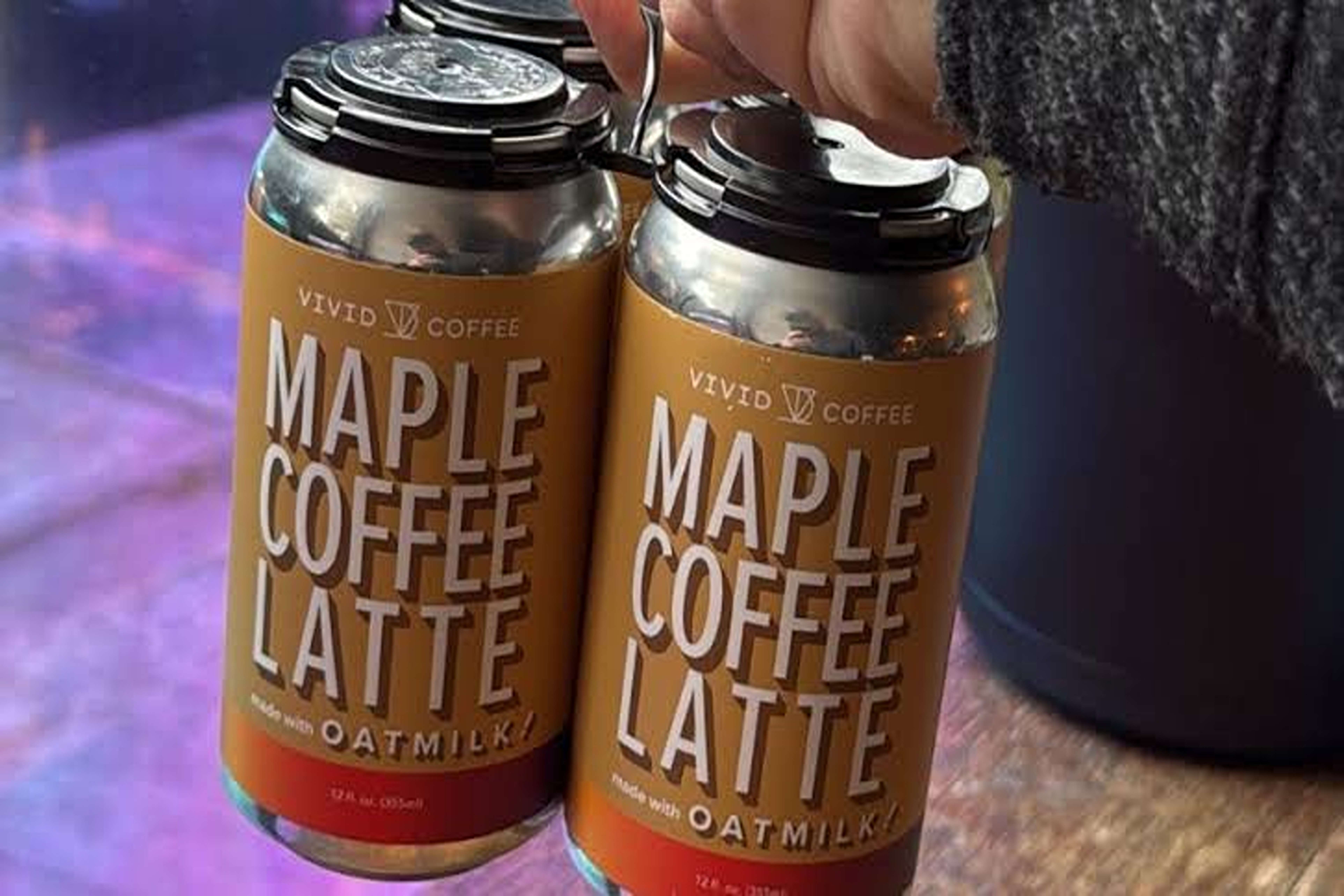
If your favorite canned cold brew feels more expensive this year, it's not your imagination. Green coffee prices have been on one of the most volatile runs in decades. That volatility is now working its way through every stage of the ready-to-drink (RTD) coffee supply chain — from the farm gate in Brazil and Vietnam to the refrigerated shelf at a convenience store thousands of miles away.
From $2 to $4.41 and Back
Arabica coffee futures on the Intercontinental Exchange (ICE) traded around $2.00 per pound in early 2024. Drought conditions in Brazil, a shortfall in Vietnamese robusta supply, and a wave of speculative futures buying pushed prices to an all-time high of $4.41 per pound in February 2025 — more than double in about a year. Robusta, the cheaper bean typically used in instant and espresso blends, climbed even further in relative terms, reportedly reaching its highest price in nearly five decades, pushing some roasters toward arabica even for blends that would normally lean on robusta and adding further demand pressure to an already tight arabica market.
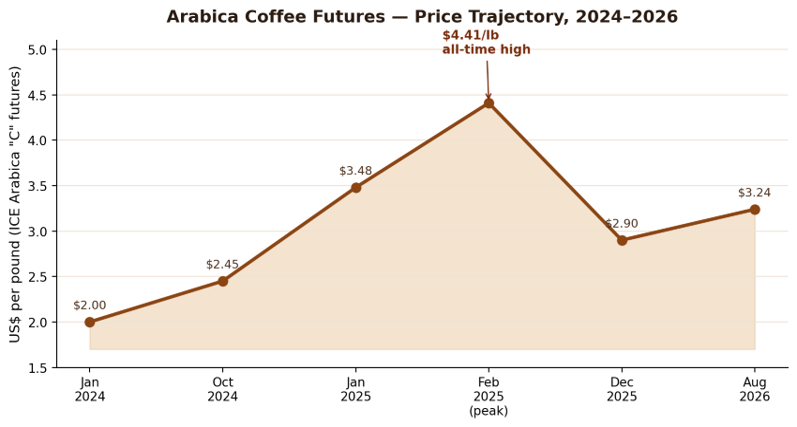
Prices have since eased, trading near $3.24 per pound in late August 2026, but that's still well above pre-2024 levels, and the market remains volatile. The supply side offers only partial relief: the USDA projects global coffee production for the 2026/2027 season at approximately 189.7 million 60-kilogram bags, an increase of 10.8 million bags from the prior year, while global consumption is estimated at 179.7 million bags. That gap suggests some rebuilding of inventories is possible. Still, the World Bank's own projection of a roughly 13% pullback in average arabica prices by 2026, versus a much smaller 2% decline for robusta, points to a market that is normalizing gradually rather than snapping back to pre-2024 levels.
Tariffs Added a Second Cost Layer
On top of the commodity swing, U.S. tariffs of up to 50% on coffee imports from Brazil, Mexico, and Vietnam — introduced in May 2025 — hit a category that is almost entirely import-dependent; roughly 99% of coffee consumed in the U.S. is imported, with no meaningful domestic alternative. That combination of commodity inflation and trade policy has left manufacturers with less room to absorb costs quietly, and it has pushed some roasters and independent coffee shops toward direct-sourcing relationships and in-house roasting to claw back margin that would otherwise go to wholesale intermediaries.
How It's Showing Up on Shelf
U.S. Bureau of Labor Statistics CPI data showed packaged coffee prices up 17–21% year-over-year at points in 2026, the fastest pace of increase in nearly three decades, with instant coffee running even hotter at roughly 24% year-over-year in some readings. Average U.S. grocery prices for roasted ground coffee hit a record high per pound in early 2026. For RTD coffee specifically, brands have generally responded in two ways rather than a straight price hike across the board:
- Mix-shifting toward premium, higher-margin cold-brew and protein-fortified SKUs, where consumers are less price-sensitive.
- Absorbing part of the cost increase within larger CPG portfolios instead of passing the full move through to RTD shelf prices, protecting volume in value-tier cans and bottles.
Packaging format matters here too. Glass-bottled RTD coffee, associated with the category's premium tier, continues to support higher price points on perceived quality even as input costs rise — while canned and PET-bottled formats stay under more direct pricing pressure at the value end of the shelf, since those formats compete primarily on price rather than positioning. Some manufacturers have started adding transparent cost or tariff surcharges to invoices, and packaging rather than silently folding the increase into the list price, a tactic trade publications suggest resonates better with cost-conscious but brand-loyal consumers than a quiet price hike.
What Comes Next
The near-term outlook is best described as partial moderation rather than reversion. Brazil's 2026 arabica harvest is projected slightly higher, and Vietnam is expecting robusta output growth in the 5–10% range, both of which should ease some of the acute tightness that defined 2024 and 2025. But with the C-market still trading well above its five-year average, elevated input costs look set to remain the baseline for RTD coffee manufacturers through the rest of 2026, keeping pricing strategy and portfolio mix near the top of the category's strategic agenda.
See our full ready-to-drink coffee market analysis for a deeper look at pricing strategy across the category.