
Why Semiconductor Investments Continue to Accelerate Worldwide
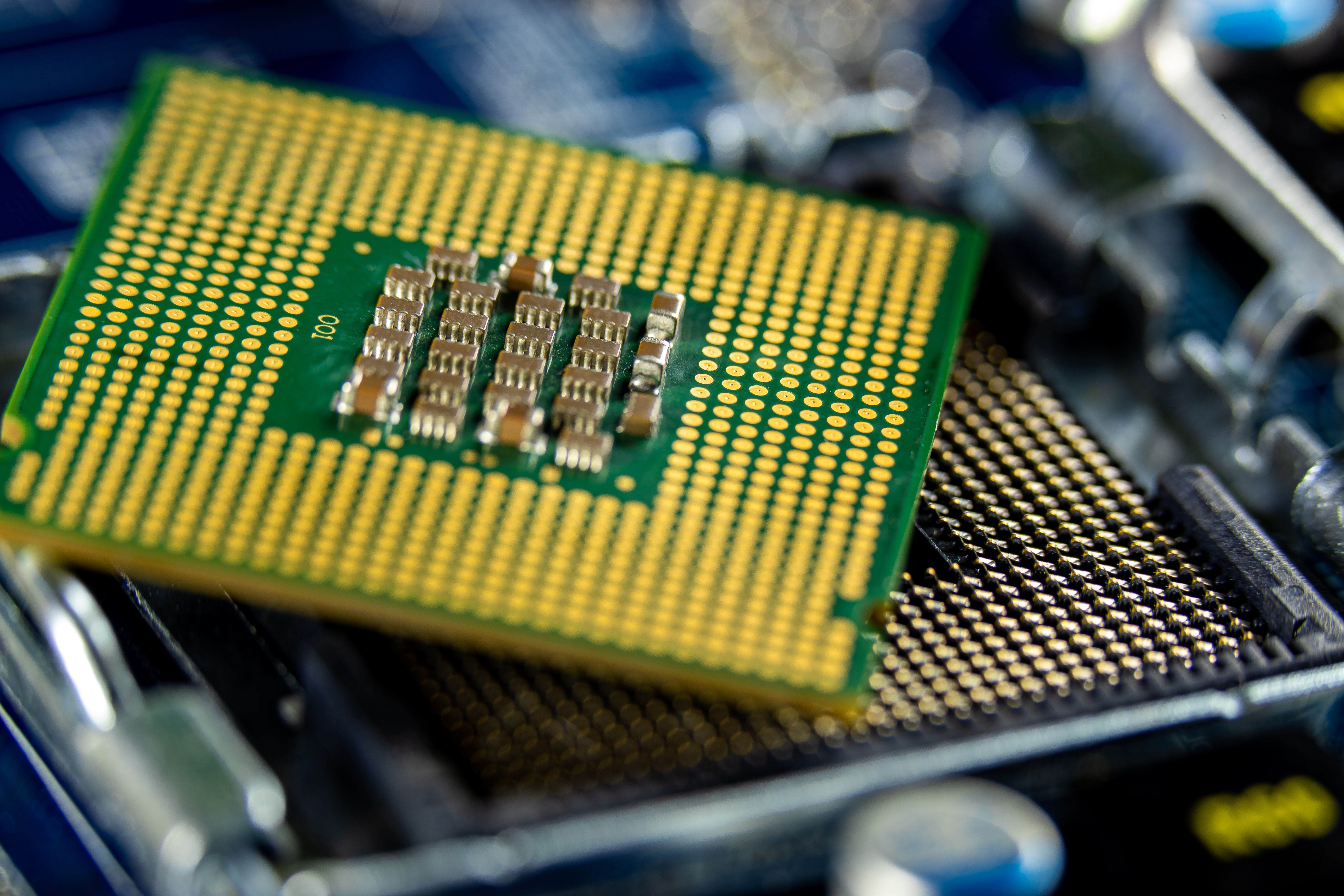
Semiconductor investment is not just growing it is compounding. Every layer of the industry, from raw wafer-fab equipment to finished AI accelerators, is seeing capital commitments that would have looked implausible five years ago.
The driver has shifted from cyclical demand recovery to something more structural: artificial intelligence workloads, geopolitical reshoring, and government industrial policy are now pulling in the same direction at the same time. The result is a global buildout of fabrication capacity, equipment orders, and government incentive programs that shows no sign of slowing in 2026. Here is what the numbers say about why.
1. Industry-Wide Capital Spending Is Setting New Records
Total semiconductor industry capital expenditure reached roughly $166 billion in 2025, up 7% from 2024, and is projected to climb to about $200 billion in 2026 a 20% jump in a single year. Foundries are driving most of that increase. TSMC alone spent $40.9 billion on capex in 2025, a quarter of the industry total, and has guided 2026 capex to a range of $52 billion to $56 billion, a 27% to 37% increase, citing 5G, AI, and high-performance computing as the drivers. GlobalFoundries is planning a 70% capex increase in 2026, while integrated device manufacturers as a group spent $41.3 billion in 2025, down 25% from the prior year, as memory and fabless AI players not traditional chipmakers now account for most of the growth.
2. Equipment Spending Is Surging Alongside Fab Construction
Global semiconductor manufacturing equipment sales hit an estimated $133 billion in 2025, up 13.7% year-over-year, with wafer-fab equipment alone surpassing $100 billion for the first time. SEMI projects total equipment spending will reach $152 billion in 2026, a 24% annual growth rate, and $166 billion in 2027. The Logic and Micro segment remains the largest category at roughly $65 billion, with memory spending close behind, driven largely by AI-related demand. Behind that spending sits a genuine construction boom: SEMI's tracking shows 18 new fabrication plants began construction in 2025 alone, part of a wider total of 97 new high-volume fabs launched globally between 2023 and 2025.
3. Government Incentive Programs Are Moving From Pledges to Payouts
Public money helped start this cycle, and in 2026 it is converting from commitments into disbursed capital. The U.S. CHIPS and Science Act allocated $39 billion for direct manufacturing incentives; as of April 2026, the CHIPS Program Office had committed $38.7 billion of that fund across 23 recipients, with roughly $11 billion physically disbursed against verified construction milestones. In Europe, the Chips Act has mobilized more than €80 billion in chip-related investment to date almost double the €43 billion the European Commission originally targeted even as the bloc's global production share holds near 10%, prompting a proposed Chips Act 2.0 in June 2026. India's Production-Linked Incentive scheme is targeting up to $25 billion in semiconductor investment, part of a broader $400–500 billion in reshoring-linked capital expected across the U.S., EU, Japan, Korea, China, and India between 2022 and 2030.
4. Single-Company Commitments Have Reached Unprecedented Scale
Individual project sizes illustrate the shift as clearly as the aggregate totals. Micron broke ground on a $100 billion megafab in Clay, New York, in January 2026 described by New York's governor as the largest private investment in the state's history. TSMC's Arizona campus has expanded from an initial $65 billion commitment toward $165 billion, with its second Arizona fab already in pilot production for 3-nanometer chips roughly six months ahead of schedule. GlobalFoundries announced a $16 billion expansion across its New York and Vermont facilities in June 2025. Even outside the traditional foundry world, Elon Musk announced plans in March 2026 for a $20–25 billion Austin, Texas wafer fab Terrafab to supply Tesla, SpaceX, and xAI, targeting one million wafer starts per month at a 2-nanometer node.
5. AI Demand Is the Common Thread Across Every Layer
What ties capital spending, equipment orders, and government policy together is a single demand source: AI compute. TSMC's 2025 revenue reached $122.5 billion, up 36% year-over-year, with every major AI accelerator Nvidia's Blackwell, AMD's Instinct, Google's TPUs fabricated at its facilities. The company commands an estimated 70% of global foundry revenue and roughly 90% of leading-edge production. Memory suppliers are seeing the same pull-through: SK Hynix has reportedly sold out its entire planned high-bandwidth memory output for 2026.
At the equipment layer, ASML's monopoly on extreme ultraviolet lithography with High-NA EUV systems costing hundreds of millions of dollars each and order books booked years out makes it a chokepoint the entire AI buildout depends on, and a clear illustration of why capital keeps flowing toward the tightest points in the supply chain.
The Bottom Line
Semiconductor investment is accelerating because three forces that used to move independently AI infrastructure demand, national security policy, and industry capex cycles are now reinforcing each other. Leading-edge fabs cost upward of $20 billion to build and take three to five years to reach commercial yield, which means today's spending is a bet on demand that persists into the early 2030s. With equipment orders, government disbursements, and single-project commitments all climbing simultaneously in 2026, the buildout looks less like a temporary response to shortage and more like a structural reset of where and how the world's chips get made.