
Grid Bottlenecks: Why Renewable Projects Are Stuck Waiting to Connect
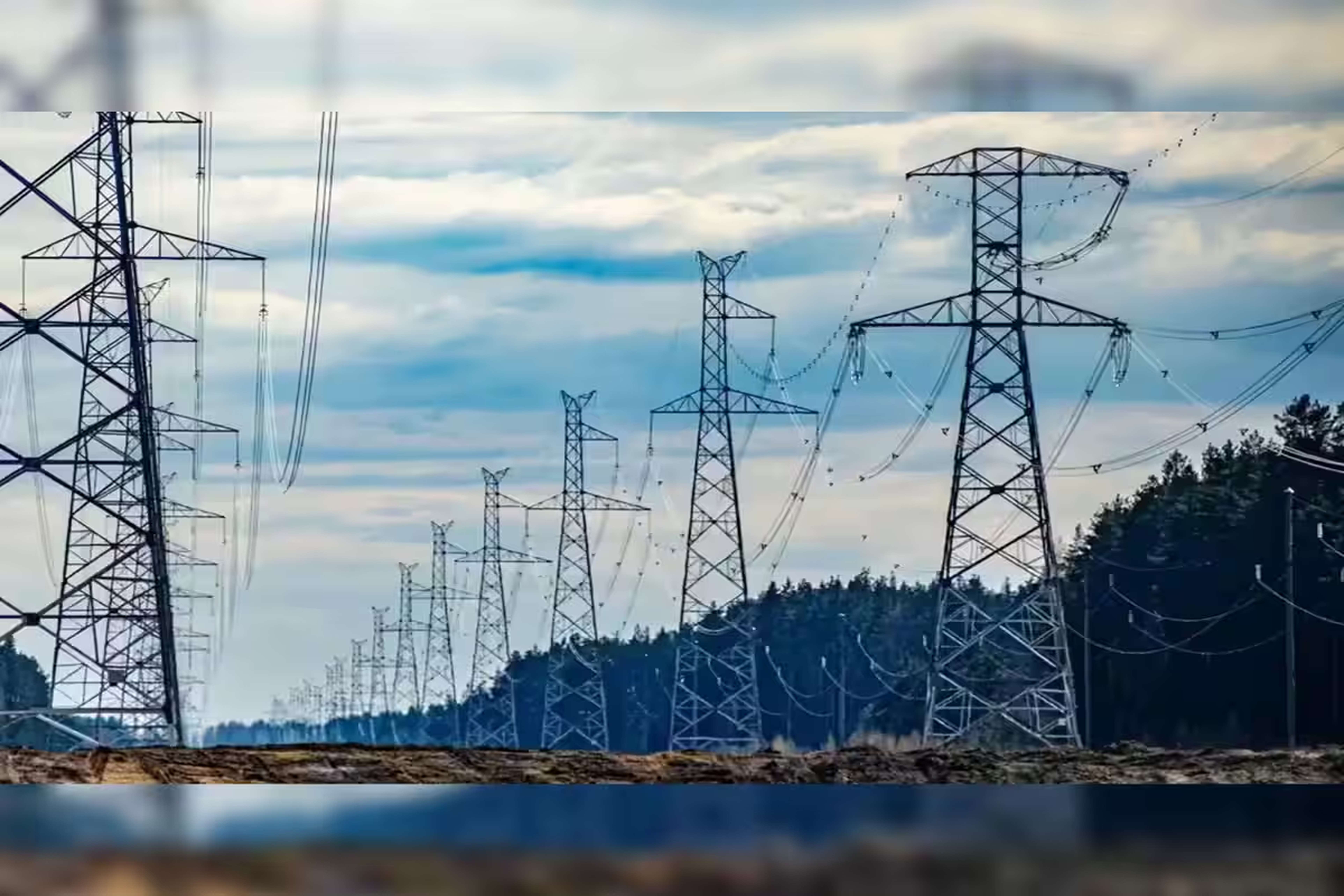
Renewable developers are building generation faster than power grids can absorb it. Across the world's largest clean-energy markets, thousands of gigawatts of solar, wind, and battery storage capacity sit in interconnection queues — the technical gauntlet a project must clear before a utility lets it push electrons onto the grid. The bottleneck is no longer financing, permitting, or turbine supply; it is the wire, the substation, and the study process standing between a finished project and the grid it was built to feed.
The Scale of the Backlog
A Queue Larger Than the Grid Itself
The numbers illustrate a system under severe strain. According to "Queued Up," the annual interconnection tracking report from the Lawrence Berkeley National Laboratory (a U.S. Department of Energy national lab), 2,061 gigawatts (GW) of generation and storage capacity were actively seeking transmission interconnection across the United States at the end of 2025 — roughly 50% larger than the country's entire installed power fleet. The backlog peaked near 2,600 GW at the end of 2023 before easing as project withdrawals accelerated. The pattern is global: the International Energy Agency's Renewables 2024 report found at least 1,650 GW of wind and solar projects in advanced development waiting for a grid connection worldwide, up 150 GW year-on-year, while its Electricity 2026 update puts total stalled capacity — including storage and large new loads such as data centers — above 2,500 GW.
Why Projects Are Stuck
An Interconnection Process Built for a Different Era
Much of the delay traces back to process design. Interconnection frameworks used by most U.S. grid operators were built in the early 2000s for a handful of large, predictable power plants a year, not the thousands of smaller, weather-dependent renewable and storage applications now arriving annually. Studies that once took months can stretch past three years; Berkeley Lab's data shows the median time from an interconnection request to a signed agreement has lengthened to well beyond the levels utilities regarded as normal a decade ago. The Federal Energy Regulatory Commission's Order 2023, issued in 2023 and taking effect across most regions in 2024, forced transmission operators to move from a serial, first-come-first-served review to a "first-ready, first-served" cluster study model — but the reform is still working through the backlog it inherited.
Speculative Filings and the Withdrawal Problem
Only 13% of the capacity that entered U.S. interconnection queues between 2000 and 2020 had reached commercial operation by the end of 2025, Berkeley Lab found, while 75% had been withdrawn outright. More than 750 GW of capacity dropped out of queues in 2025 alone. Developers routinely file multiple speculative applications for the same project to hedge against uncertain outcomes, congesting queues with capacity that will never be built and forcing genuinely viable projects to shoulder network-upgrade costs triggered by neighbors who eventually walk away — a dynamic the American Clean Power Association has flagged as an outdated cost-allocation methodology that penalizes serious developers.
The Investment Gap Behind the Delays
Grid Spending Isn't Keeping Pace With Generation
Capital is flowing to power plants faster than to the wires meant to carry their output. The IEA estimates global grid investment must rise roughly 50% from around USD 400 billion a year to meet 2030 demand, and warns that lead times for cables and large power transformers have nearly doubled since 2021, with specialised equipment now taking up to five years to deliver. BloombergNEF's Grid Investment Outlook 2025 found global grid capital spending is on track to exceed USD 470 billion in 2025 — a 16% rise and a record — with the United States alone accounting for about USD 115 billion. Even so, BloombergNEF cautioned that higher spending will not eliminate bottlenecks on its own, given persistent supply-chain and skilled-labor constraints. McKinsey has separately estimated close to 1,000 GW of solar and 500 GW of wind capacity waiting for grid connection across Europe and the United States alone.
Reform Is Underway, But Results Are Mixed
Industry Voices on What's Still Missing
Trade groups tracking the reform process describe uneven progress. A June 2026 report from Advanced Energy United, prepared with Grid Strategies and the Brattle Group, found U.S. grid operators have made "significant progress" implementing FERC-mandated interconnection reforms over the past two years, but cautioned there is not yet clear evidence that requests are being processed faster in practice. The report also flagged that fast-track interconnection pathways designed to ease near-term reliability pressure are disproportionately benefiting utility-affiliated and fossil-fuel resources rather than the broader mix of projects waiting in line — a concern the American Clean Power Association has separately raised in filings urging FERC to revisit cost-allocation rules that it argues still slow cluster studies down.
What Developers and Utilities Are Doing About It
Corporate Backlogs as a Barometer
The strain shows up directly in company disclosures. NextEra Energy, the largest U.S. developer of wind, solar, and battery storage, reported a renewables-and-storage development backlog of roughly 33 GW in its second-quarter 2026 investor presentation, alongside continued transmission build-out through its NextEra Energy Transmission unit, including a 137-mile, 345-kV line completed ahead of schedule in New Mexico. Developers elsewhere are responding by over-filing in queues to hedge against attrition, co-locating storage with generation to reduce the size of the network upgrade a project triggers, and — increasingly — turning to distributed and behind-the-meter solar and storage that can sidestep transmission-level queues altogether.
The Road Ahead
None of the fixes on the table — cluster studies, tighter site-readiness requirements, grid-enhancing technologies, or faster equipment manufacturing — will clear a queue measured in thousands of gigawatts overnight. What has changed is the industry consensus on where the real constraint sits: not in panels, turbines, or capital, but in the wires and study processes connecting them to demand. Grid investment, permitting reform, and interconnection redesign are converging as the three levers that will determine how much of the renewable pipeline now stuck in queues actually reaches the grid this decade.