
EV Battery Supply Chain Bottlenecks to Watch in 2026
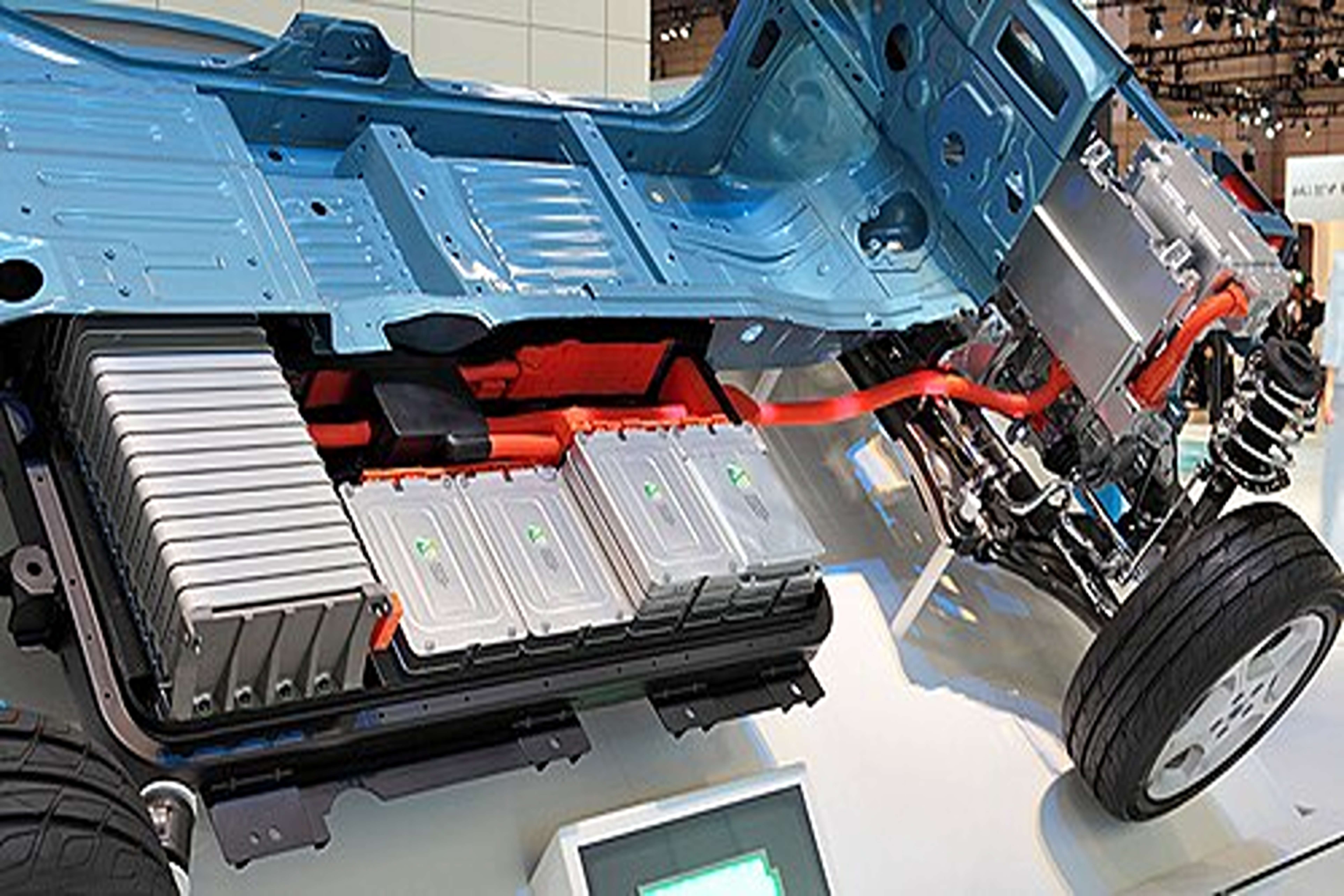
The electric vehicle battery supply chain enters 2026 on far less stable footing than the oversupply narrative of the past two years suggested. After a prolonged price slump, lithium markets have flipped toward deficit, China has demonstrated it can throttle graphite and cell exports on short notice, and Europe's gigafactory pipeline has lost more capacity than it added. For procurement teams and OEM planners, the bottlenecks below are the ones with the clearest evidence behind them, drawn from primary disclosures rather than aggregated market forecasts.
Lithium Swings From Surplus to Deficit
The comfortable lithium glut of 2024-25 is unwinding faster than most planning cycles anticipated. The International Energy Agency's Global Critical Minerals Outlook 2026 records lithium demand growth of around 25% per year on average over the past two years, even as investment in new lithium capacity fell by roughly 40% amid weak prices and shifting battery chemistries. That pullback in spending is now colliding with reaccelerating demand: Morgan Stanley projects a lithium carbonate equivalent deficit of about 80,000 tonnes for 2026, while UBS forecasts a narrower 22,000-tonne shortfall, both a reversal from the 61,000-tonne surplus estimated for 2025. Battery-grade lithium carbonate prices have already more than doubled off their 2025 lows, based on figures cited by Reuters-sourced analyst notes circulating through early 2026.
Cobalt Exposure to a Single Jurisdiction
Cobalt illustrates how concentrated sourcing translates directly into price shocks. The IEA's 2026 outlook attributes a roughly 130% jump in cobalt prices to export restrictions imposed by the Democratic Republic of the Congo, which supplies close to two-thirds of global mined cobalt. The impact on finished battery costs is now more contained than in past cycles because high-nickel and lithium iron phosphate chemistries, which use little or no cobalt, dominate today's EV battery mix, but any procurement strategy still tied to nickel-cobalt-manganese cathodes remains directly exposed to DRC policy decisions.
China's Export-Licensing Lever on Graphite and Cells
Beijing has shown it is willing to use battery-material export licensing as a bargaining tool. China's Ministry of Commerce placed lithium-ion batteries, cathode materials, and artificial graphite anode materials on its dual-use export control list under Decision No. 58, effective 8 November 2025, before suspending enforcement a day later under Decision No. 70 amid broader US-China trade talks. That suspension runs only until 10 November 2026. Because China accounts for roughly 80% of global natural graphite output and dominates spherical graphite processing for anodes, any lapse or renewal of the licensing regime after that date would ripple through every non-Chinese cell manufacturer within weeks, not quarters.
A Structural Cathode-to-Mining Capacity Gap
Beyond individual minerals, the IEA outlook flags a sequencing problem across the value chain: planned cathode production capacity is only about one-third of projected lithium mining capacity. In practice, this means mined lithium can outpace the industry's ability to convert it into cathode-active material, creating localized processing bottlenecks even in years when raw mineral supply looks adequate on paper.
Gigafactory Capacity Is Diverging by Region
China Consolidates Its Lead
CATL's 2025 annual report, released 10 March 2026, put the company's global production capacity at 772 GWh, with a further 321 GWh under construction and a capacity utilisation rate of 96.9%. CATL alone held a 39.2% global power-battery market share in 2025. McKinsey's battery analysis separately estimates China now controls 67% of global lithium-refining capacity, reinforcing that cell-level scale is backed by upstream processing dominance rather than mining assets alone.
Europe's Pipeline Is Shrinking, Not Growing
ReCharge, the European industry alliance spanning the battery value chain, reported in June 2026 that Europe lost 700 GWh of planned gigafactory capacity over an 18-month span as projects stalled on weak EV demand and financing gaps. The European Commission's response, a EUR 1.5 billion Battery Booster Facility of interest-free loans aimed at helping manufacturers reach an initial 10 GWh of production, targets first-stage ramp-up rather than the terawatt-hour scale China already operates at.
The US Pulls Back on Demand-Side Support
In the United States, the Center for Strategic and International Studies notes that mobility applications are expected to remain 75-90% of total battery demand through 2035, with about 40% of operating and planned domestic capacity tied to automaker partnerships. That reliance is now a liability: the One Big Beautiful Bill Act, signed in July 2025, eliminated key federal EV incentives that had underpinned demand projections. On the supply side, the Department of Energy issued a Notice of Funding Opportunity for up to $500 million in March 2026 to expand domestic critical-materials processing and battery manufacturing, but this is aimed at closing a capacity gap, not addressing the demand shortfall created by the same year's policy reversal.
What This Means for 2026 Planning
McKinsey's base-case scenario puts global battery demand rising from roughly 1,970 GWh in 2025 to about 3,910 GWh by 2030, and notes that gigafactories typically need three to six years to reach full-capacity ramp-up. That lag, layered onto a lithium market that has already flipped to deficit, a cobalt price shock, an unresolved Chinese export-licensing deadline in November, and a shrinking European pipeline, means the bottlenecks of 2026 are less about raw mineral scarcity in aggregate and more about timing, jurisdictional concentration, and policy volatility at each link of the chain.