
China's Chemical Overcapacity Problem and What It Means for Global Pricing
China's chemical industry has spent the last five years building faster than the world, or even China itself, can consume. What began as a strategic push for self-sufficiency in basic petrochemicals has tipped into a structural glut that is now reshaping trade flows, margins, and pricing power across the global chemical value chain. For buyers and producers alike, understanding the scale of this overcapacity, and how Beijing is responding to it, has become essential to forecasting where chemical prices go next.
The Scale of China's Capacity Build-Out
China became the world's largest ethylene producer in 2022 and has not slowed down since. By the end of 2025, the country's total ethylene production capacity exceeded 62 million metric tons annually, a 19% year-on-year increase that pushed China's share of global ethylene capacity to roughly a quarter of the world total, ahead of the United States. Nearly 10 million tons of new domestic ethylene capacity came online in 2025 alone, lifting output to an estimated 53.3 million tons, up 11.9% from the prior year. This is not an isolated data point: national industrial capacity utilization, tracked by China's National Bureau of Statistics, averaged just 74.4% across 2025, down 0.6 percentage points from the year before, with manufacturing utilization falling to 75.2% in the fourth quarter alone.
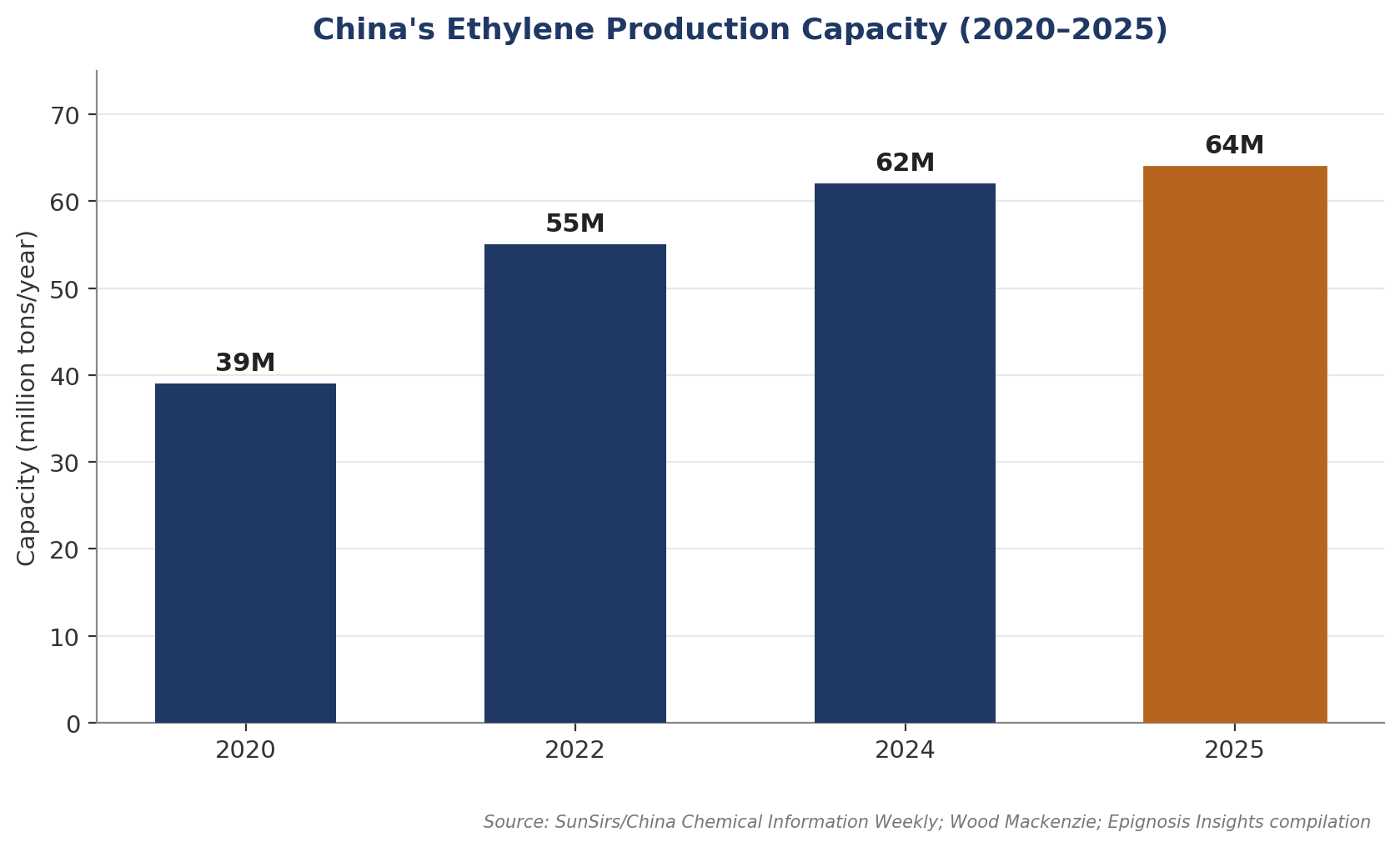
Figure 1: China's ethylene production capacity, 2020–2025.
Propylene Oversupply Is Even Steeper
The imbalance is more extreme downstream. According to ICIS Asian Chemical Connections analysis, China's ethylene capacity exceeding local demand is projected to jump from roughly 5.2 million tons in 2024 to an all-time high of 11.5 million tons in 2025, a 121% increase in a single year. Propylene oversupply is worse still, forecast to reach 20.3 million tons in 2025, up 179% from 2024, reflecting the multiple production routes, including propane dehydrogenation, that Chinese producers have layered on top of traditional steam cracking.
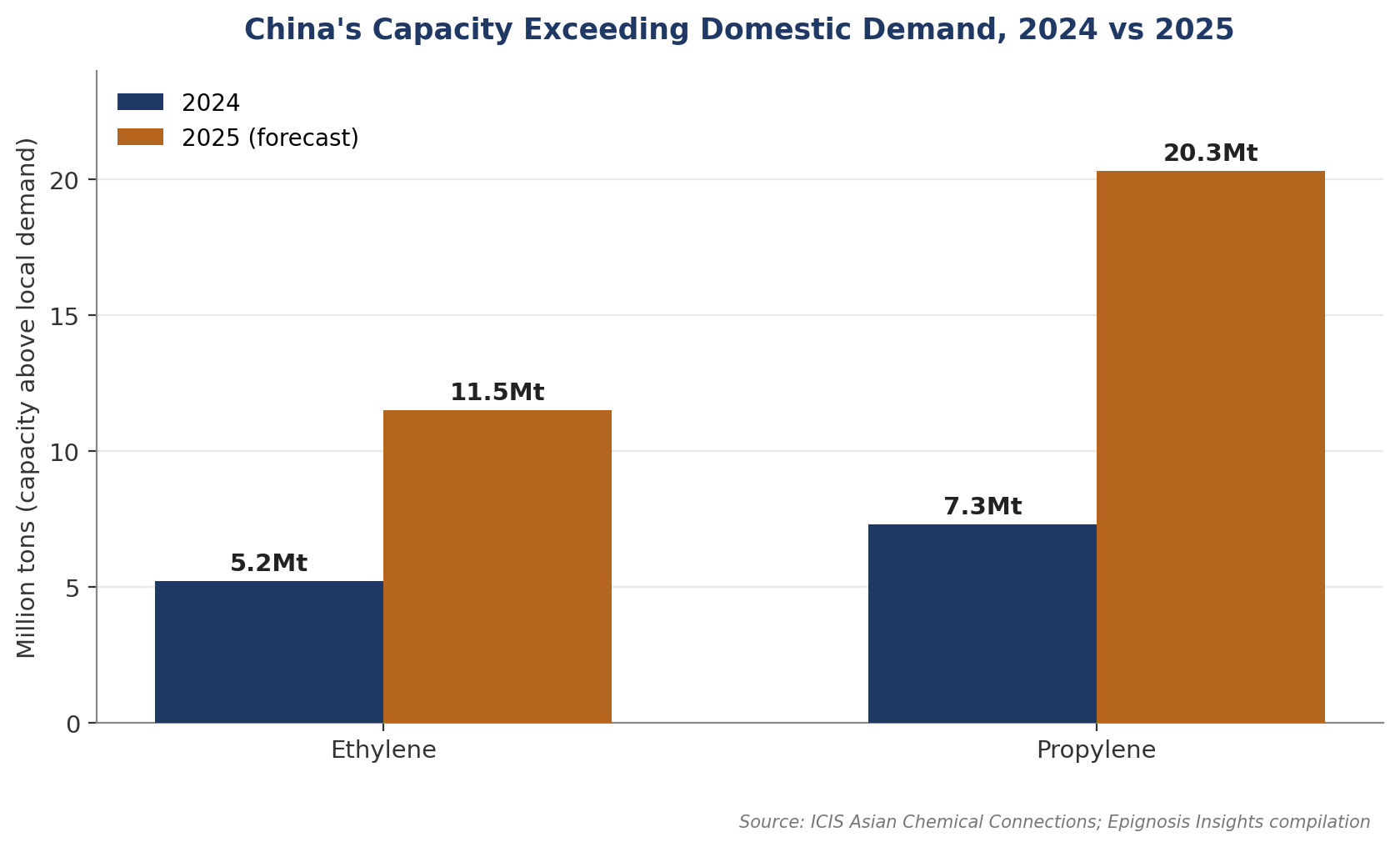
Figure 2: China's capacity exceeding domestic demand for ethylene and propylene, 2024 vs. 2025.
Global Ripple Effects on Utilization and Margins
China's export-oriented surplus is now the primary force compressing plant economics everywhere else. Wood Mackenzie estimates that global ethylene capacity expanded by more than 40 million tons between 2020 and 2025, with around 70% of that new capacity built in China, while global demand grew by only about 27 million tons over the same period. The result is a global average ethylene plant utilization rate of roughly 80%, a level at which integrated polyethylene cash margins have been negative for much of the period since mid-2022. The pain is sharpest outside China: European cracker utilization fell to approximately 75% by the end of 2024, its lowest level on record, leaving about 2 million tons of capacity idle, while Japan's ethylene utilization rate dropped below 70% in June 2025, its weakest reading since 2009.
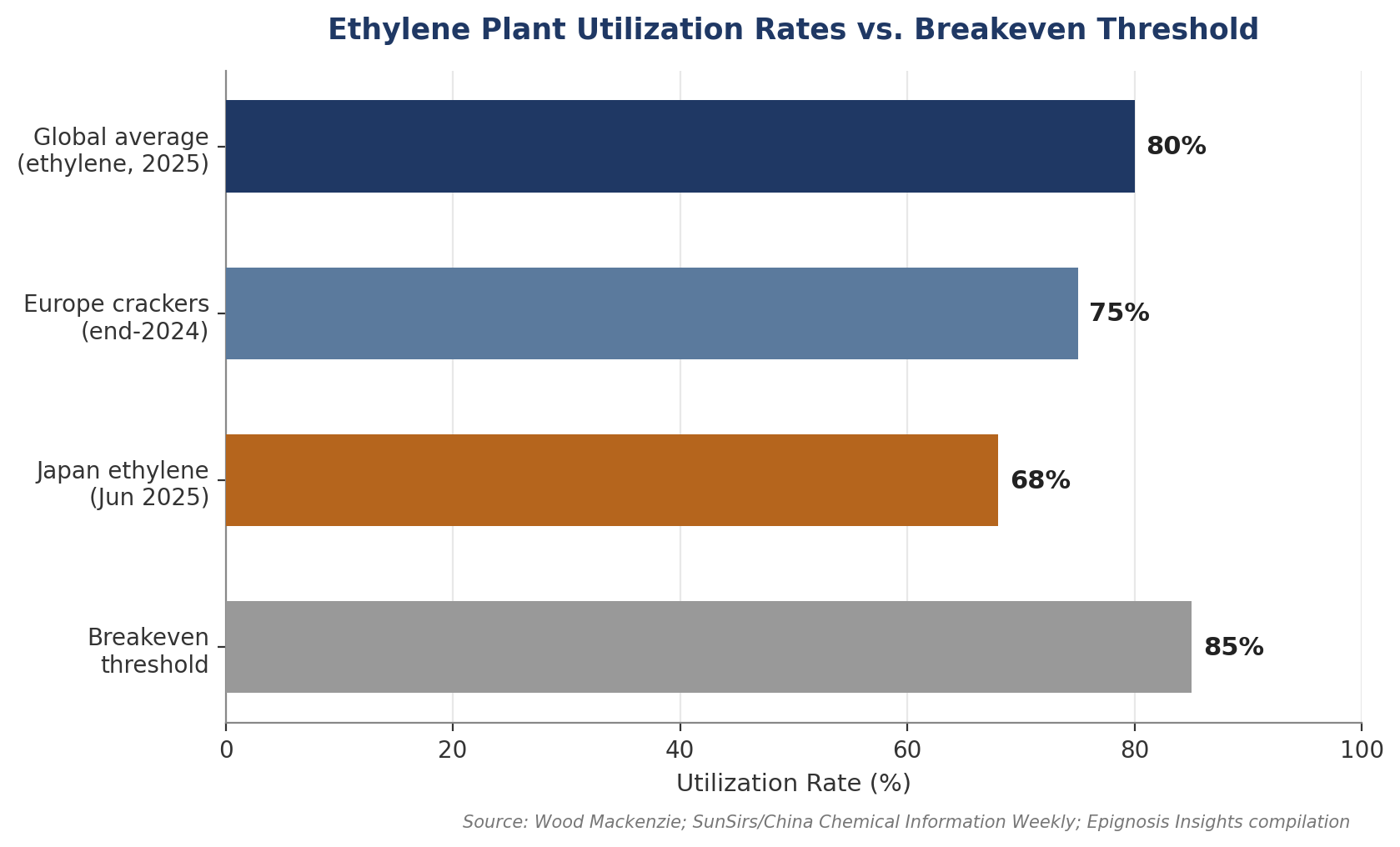
Figure 3: Ethylene plant utilization rates across regions versus the industry breakeven threshold.
Company disclosures echo the trend. LyondellBasell's 2025 results cited capacity additions outpacing global demand growth as a central driver of falling polyethylene chain margins in North America and import-driven polymer margin declines in Europe, while separate industry analysis has directly attributed a wave of cracker and refinery closures across the UK and Europe, involving Dow, ExxonMobil, SABIC, TotalEnergies, and Versalis, to competitive pressure from low-cost Chinese material. Sinopec, meanwhile, overtook BASF in 2025 to become the world's largest chemical company by revenue, a symbolic marker of how far the center of gravity in global chemicals has shifted.
Beijing's Policy Response: Anti-Involution
Chinese policymakers have acknowledged the problem publicly. The Central Commission for Financial and Economic Affairs elevated so-called anti-involution policy as a national priority in July 2025, targeting excessive price competition across ten key industries including petrochemicals, steel, and building materials, with government-set 2025-2026 output growth targets set deliberately below 2024 levels. The Ministry of Industry and Information Technology has convened major producers in overcapacity-prone chains such as PTA and PET to demand capacity reporting, and PetroChina has moved to phase out 19 older refining and chemical units to curb sector-wide glut. Yet early results have been mixed:
China's National Bureau of Statistics reported that profits from chemical raw materials and chemical product manufacturing fell 5.4% in the first ten months of 2025 even as broader industrial profits rose 1.9%, and analysts at the China Petroleum and Chemical Industry Federation note that fixed-asset investment in chemicals, though decelerating, is still rising overall, meaning the capacity-expansion cycle has not yet fully played out.
Trade Barriers Are Rising in Response
Importing countries are no longer waiting for Beijing's rebalancing to take effect. India's Directorate General of Trade Remedies imposed anti-dumping duties of up to $707 per ton on PVC paste resin from China and five other countries in 2025, and separately proposed duties on suspension-grade PVC after finding Chinese cargoes priced $20 to $30 per ton below other Asian material amid export volumes of nearly 1.05 million tons to India in just nine months. In Europe, the European Commission has opened or advanced anti-dumping investigations covering Chinese-linked flows of PET, alkyl phosphate esters, epoxy resins, and ABS, with duties on some Chinese PET producers already set between 7% and 24%, while Brazil raised import taxes on Chinese PVC after Chinese and US export prices converged near five-year lows of roughly $625 to $630 per ton. The pattern is consistent across the developing and developed world: as Chinese producers seek export outlets for domestic surplus, importing nations are responding with tariff walls that fragment what was once a more open global pricing market.
What This Means for Global Chemical Pricing
For buyers, the near-term arithmetic still favors lower prices: with global ethylene and propylene capacity running well ahead of demand through at least 2027 according to S&P Global Ratings, and China's own rebalancing not expected to meaningfully tighten markets before 2028 at the earliest per Wood Mackenzie's outlook, benchmark chemical prices are likely to stay depressed relative to historical cycles. For producers outside China, the strategic calculus is shifting toward consolidation, asset rationalization, and geographic realignment toward feedstock-advantaged regions such as the US Gulf Coast and the Middle East. The net effect is a global chemicals market being reshaped less by demand growth than by the pace at which China's surplus capacity is absorbed, exported, or ultimately shut down.