Global Display Panel Price Tracker
LCD TV panel prices rose in January 2026 for the first time in months. See LG Display's OLED mix, BOE's Gen 8.6 ramp, and Korea's record H1 display exports.


LCD TV panel prices rose in January 2026 for the first time in months. See LG Display's OLED mix, BOE's Gen 8.6 ramp, and Korea's record H1 display exports.
The Global Display Panel Market enters the second half of 2026 in an unusual position: prices are rising even as end-demand stays soft, a combination driven less by consumer pull and more by a supply-side squeeze radiating out from the broader memory chip shortage. TrendForce's TV shipment survey shows panel prices increasing in January 2026 for the first time in several months, with mainstream LCD TV panel sizes moving up in tandem as Chinese manufacturers trimmed output faster than demand fell. At the same time, South Korea's two flagship panel makers are reporting sharply different fortunes: LG Display posted its first half-year profit in five years on the back of a deepening OLED mix, while China's BOE Technology is guiding to a sharp profit jump on a stronger LCD cycle and the ramp of its next-generation Gen 8.6 OLED line. This report walks through the January 2026 TV panel price m ove, the LCD-versus-OLED revenue and capacity story at the two largest panel makers, Korea's national trade data on display exports, and the outlook for panel pricing into year-end, closing with five one-line FAQs. Overall, the market is best understood as three regional supply pools moving at different speeds Korean OLED, Chinese LCD and Gen 8.6 OLED, and a diversifying Taiwanese base rather than a single global panel price, a distinction with direct implications for sourcing and contract strategy across TV, IT and mobile categories alike.
Display panel pricing turned a corner in January 2026. According to TrendForce, mainstream LCD TV panel prices spanning 32-inch, 43-inch, 55-inch and 65-inch sizes were set to rise by roughly US$1 each after holding flat through the back half of 2025, marking the start of what the research firm characterised as a panel price upcycle. The move was driven primarily by a supply-side squeeze rather than a demand surge: major Chinese panel makers, including HKC, BOE and TCL CSOT, moved to suspend selected factory operations to reduce labour costs and ease inventory burdens, cutting LCD panel supply by roughly 3.8 percent against a much smaller 1.8 percent decline in demand, a mismatch tight enough to support higher offer levels into the first quarter. Samsung's co-CEO TM Roh underscored the broader component-cost backdrop at CES 2026, telling Reuters that no company is immune to the ongoing global memory chip shortage a dynamic that matters to panel pricing because rising memory costs are pushing brands to accelerate panel procurement ahead of expected further increases, tightening the panel market even further. TrendForce's TV shipment survey adds that display panels account for roughly 40 to 50 percent of total TV manufacturing cost, so even the modest per-unit price increases seen in January flow through quickly to brand-level cost structures; the firm has already revised its 2026 global TV shipment forecast down to 194.81 million units, a 0.6 percent year-on-year decline, citing the squeeze between defending margins and holding market share.
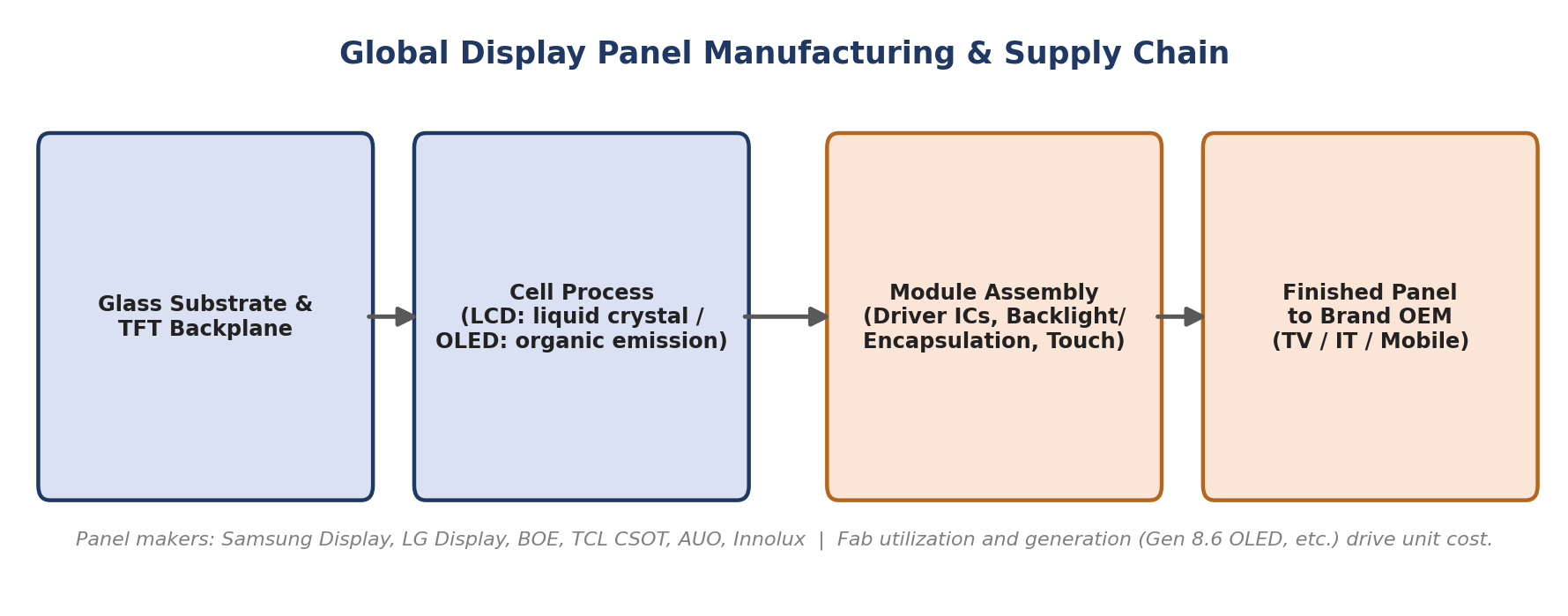
Figure 1: Global display panel manufacturing and supply chain, from substrate to finished panel.
LG Display: OLED Mix Deepens, First H1 Profit in Five Years
LG Display's second-quarter 2026 results, presented in the company's investor earnings call, show revenue of KRW 5.6121 trillion (approximately US$3.8 billion), up slightly both quarter-on-quarter and year-on-year despite seasonal weakness in mobile panels. OLED products accounted for 57 percent of total revenue in the quarter down slightly from a peak of 60 percent in Q1 2026 but still well above the 56 percent level of a year earlier reflecting a business mix that has shifted decisively toward higher-value panels over the past five quarters, as shown in Figure 2 below. Management confirmed that the first half of 2026 marked the company's first half-year profit in five years, helped by improved yields, tighter cost control and the OLED-focused mix, even though the reported quarterly operating margin was negative due to one-off restructuring costs tied to workforce optimisation. Looking ahead, LG Display guided for Q3 2026 area shipments to rise by a mid-single-digit percentage quarter-on-quarter, with average selling price per square metre expected to climb by a high-teens percentage, driven largely by mobile OLED seasonality tied to new smartphone launches.
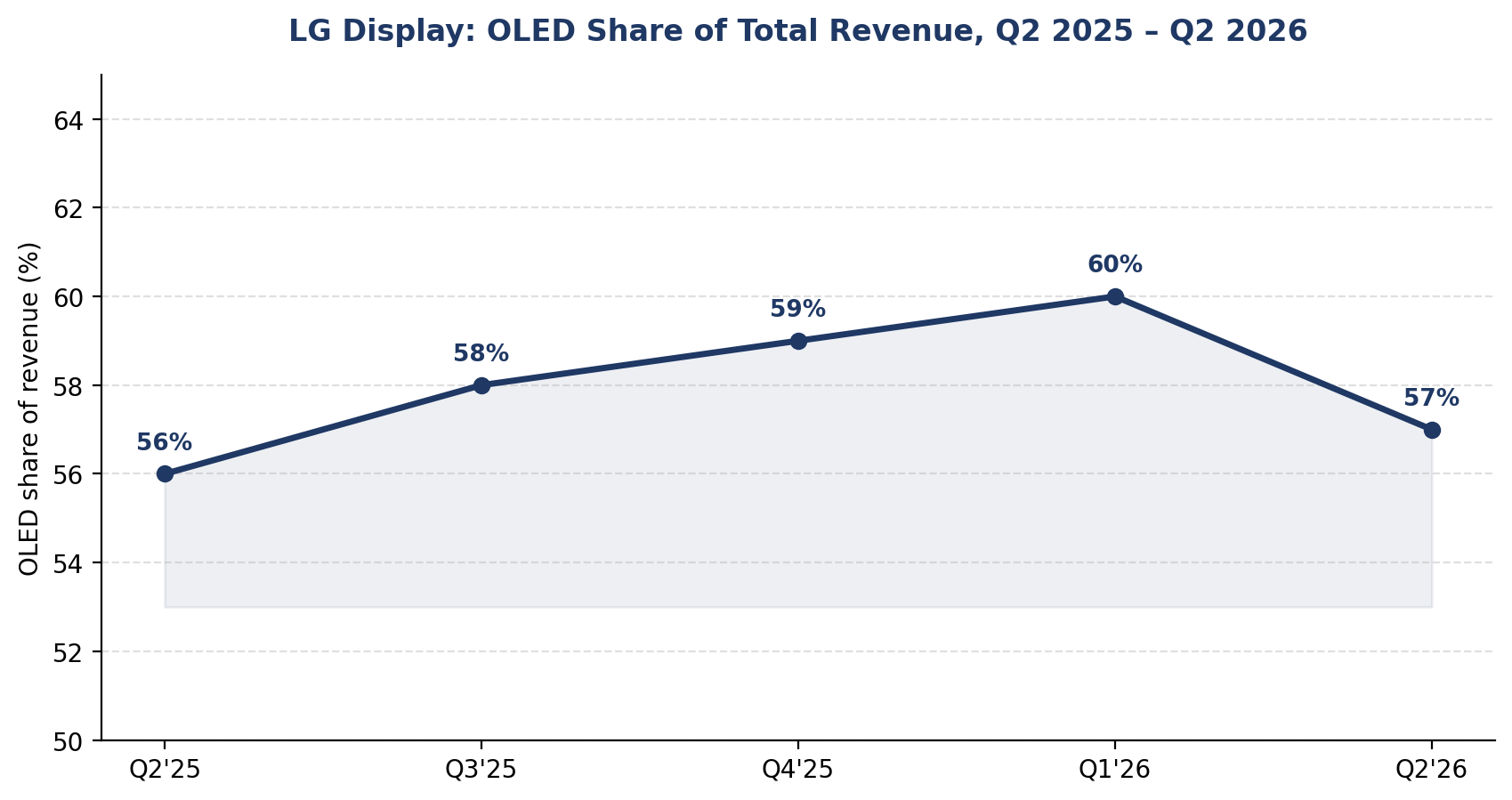
Figure 2: LG Display OLED share of total revenue, Q2 2025–Q2 2026.
By product line, IT panels monitors, tablets and notebooks represented the largest single segment of LG Display's Q2 2026 revenue at 36 percent, followed by mobile and other products at 32 percent, TV panels at 21 percent, and automotive displays at 11 percent, illustrated in Figure 3. The relatively modest 21 percent TV share reflects LG Display's strategic pivot away from commodity LCD TV panels a category increasingly dominated by Chinese suppliers and toward premium White OLED TV panels and fast-growing OLED gaming monitors, a segment management specifically flagged as driving stronger shipments in the IT category.
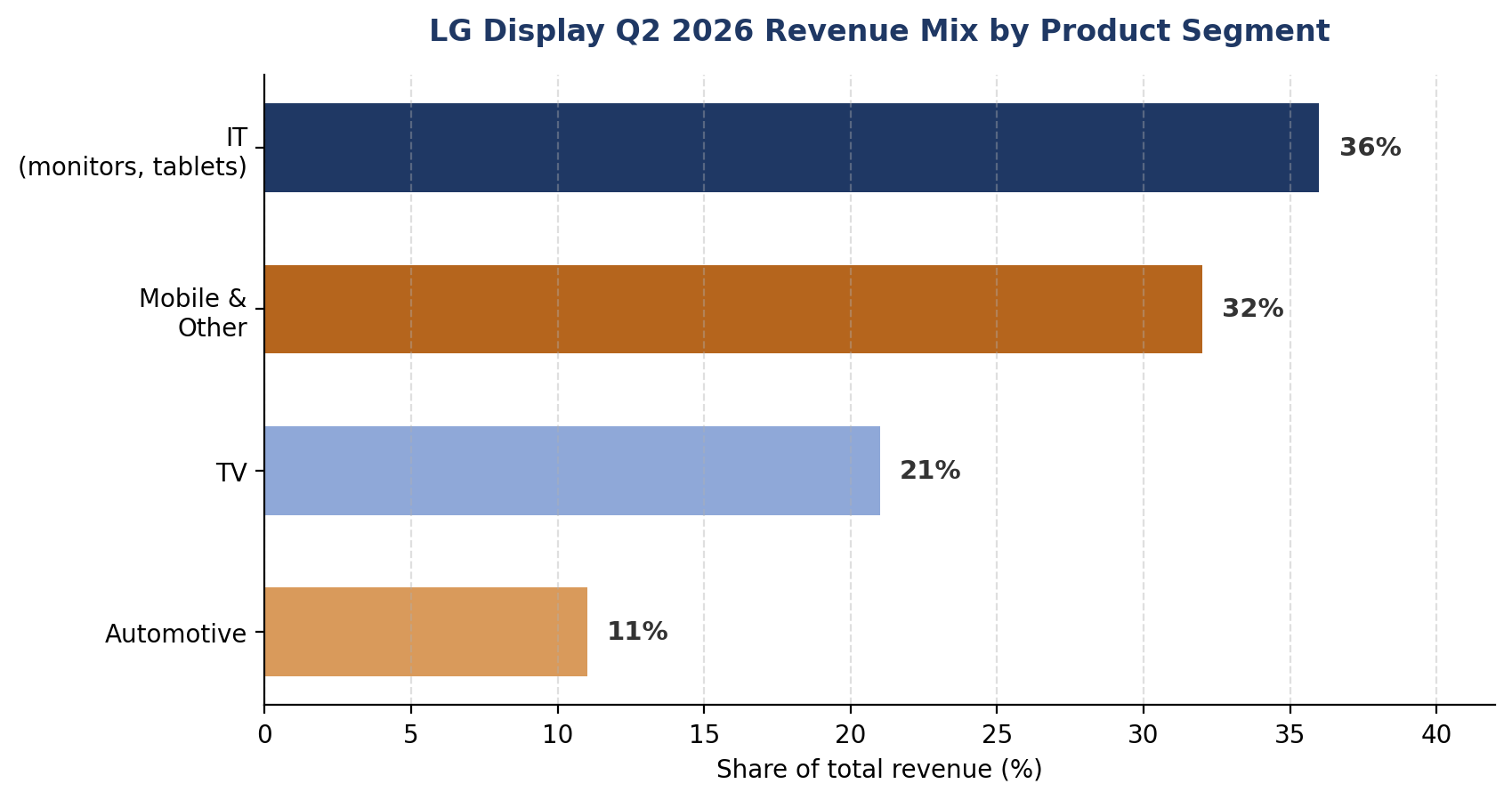
Figure 3: LG Display Q2 2026 revenue mix by product segment.
Taiwan's panel makers, led by AUO and Innolux, present a more cautious counterpoint to the Korean and Chinese narratives above. Both companies, along with smaller peers HannStar and Giantplus, posted weaker April 2026 revenue as the early pull-forward effect from customers stocking ahead of expected cost increases began to fade, according to industry trade coverage of the Taiwanese panel sector. Rather than compete head-on with Chinese Gen 8.6 capacity in commodity LCD, Taiwan's leading makers have increasingly pivoted toward chip-on-panel (COP) and fan-out panel-level packaging (FOPLP) technologies that serve semiconductor and advanced-packaging customers, a diversification strategy that reduces their direct exposure to the LCD TV panel price cycle described above but also means Taiwan's makers are less likely to be the marginal supplier that determines near-term panel pricing. This growing divergence between Korea (premium OLED), China (commodity LCD and Gen 8.6 OLED scale) and Taiwan (diversification into adjacent semiconductor packaging) is becoming one of the defining structural features of the global panel industry heading into 2027.
China's BOE Technology, the world's largest display panel maker by shipment volume, closed fiscal year 2024 with full-year revenue of CNY 198.4 billion (approximately US$27.2 billion), up 13.7 percent year-on-year, with net profit attributable to shareholders more than doubling to CNY 5.3 billion, according to the company's own annual results. Momentum has continued into 2026: BOE has guided for first-half 2026 net profit to rise sharply, a move the company attributes to a stronger LCD pricing cycle, growing shipments of higher-end AMOLED panels, and the start of mass production at its Gen 8.6 OLED line for IT-sized panels, according to a DigiTimes report on the company's outlook. That new Gen 8.6 line held a mass-production shipment ceremony in mid-June 2026, positioning BOE to claim a first-mover title in large-substrate IT OLED production even though reported production yields remain below 30 percent at this early stage a reminder that new-generation OLED capacity additions take time to translate into meaningful shipment volume and price impact.
Korea's national trade statistics corroborate the panel-price and mix story emerging from company results. South Korea's Ministry of Trade, Industry and Resources reported that the country's ICT exports reached a record USD 253.9 billion in the first half of 2026, up sharply year-on-year, with the ministry specifically noting that display exports grew on higher shipments of OLED panels for new mobile phone models and LCD panels for lower- and mid-priced laptops a pattern consistent with LG Display's own reporting of mobile OLED seasonality and IT-segment strength. At a more granular level, Korea Customs Service trade data shows flat panel display module exports valued at USD 1.375 billion in June 2026, up from USD 1.301 billion the prior month, a modest but positive sequential signal for Korean panel shipment values even as Chinese suppliers continue to gain share in commodity LCD categories. Structurally, the Korea Display Industry Association's data underscores how concentrated and export-oriented the Korean supply base remains, built around two large panel makers Samsung Display and LG Display supported by roughly 1,290 small and medium-sized material, parts and equipment suppliers with a domestic localisation rate of about 65 percent, a base that continues to anchor Korea's position in premium OLED even as China consolidates its lead in mainstream LCD.
The near-term panel price trajectory hinges on three interlocking forces. First, the memory chip shortage remains the dominant macro driver: with DRAM and NAND capacity increasingly reallocated toward AI-related HBM production, brands across TVs, notebooks and smartphones are pre-stocking panels and finished components alike to get ahead of further cost increases, a dynamic that is itself adding to near-term panel demand independent of underlying consumer sell-through. Second, Chinese panel makers' willingness to trim output rather than compete purely on price has been the key enabler of the January 2026 price upturn, and continued production discipline at BOE, TCL CSOT and HKC will determine whether the upcycle extends through the second half of the year or fades as previously announced capacity comes back online. Third, the structural shift toward OLED, visible in both LG Display's rising OLED revenue share and BOE's aggressive Gen 8.6 IT OLED ramp, is gradually reducing the weight of commodity LCD pricing in the overall panel market narrative, even though LCD still accounts for the large majority of global TV shipments by unit volume. Taken together, expect continued but uneven price firmness through the third quarter, concentrated in mainstream LCD TV sizes and mobile OLED, with a genuine risk of a softer second-half peak season if new panel supply including BOE's ramping Gen 8.6 line arrives faster than demand can absorb it.
For buyers and procurement teams, the practical implication is that panel sourcing strategy now needs to account for at least three distinct supply pools moving at different speeds: Korean OLED capacity, priced at a structural premium but increasingly the only source for top-tier mobile, IT and automotive panels; Chinese LCD and fast-scaling Gen 8.6 OLED capacity, currently the swing factor for both price direction and volume availability; and Taiwanese capacity, increasingly diversified away from pure commodity panel supply. Contracts that assume a single blended global panel price, rather than pricing by technology and country of supply, are likely to increasingly misprice risk in this environment — echoing the same regional-spread dynamic that has become the defining feature of other tracked commodity markets this year.
| TV Panel Size | Dec 2025 Trend | Jan 2026 Move | Driver |
| 32-inch | Flat | +US$1 | Supply cut ahead of demand cut |
| 43-inch | Flat | +US$1 | Early brand restocking |
| 55-inch | Flat | +US$1 | Mainstream size, memory pass-through |
| 65-inch | Flat | +US$1 | Premium tier, tight panel supply |
Table 1: LCD TV panel price movement by size, January 2026, following TrendForce's monthly panel price survey.