Apple Inc.: Brand Health Tracking Report
Consumer Perception, Awareness, Top-of-Mind Recall and Net Promoter Score Analysis — H1 2026
Consumer Perception, Awareness, Top-of-Mind Recall and Net Promoter Score Analysis — H1 2026
Apple continues to hold one of the strongest brand health profiles in the global technology sector, anchored by category-leading unaided awareness, a top-of-mind position in the smartphone and personal technology space, and a Net Promoter Score that outperforms the consumer electronics industry benchmark by a wide margin. This report synthesizes tracking data across four core pillars brand awareness, top-of-mind recall, consumer perception, and Net Promoter Score to assess the current state of Apple's brand equity and identify areas of strength and vulnerability. Overall, Apple's brand health remains robust, with innovation, design and product quality as the clearest points of differentiation. Value for money and sustainability perception emerge as the two attributes where Apple trails its own halo score, representing both a watch-point and an opportunity for targeted brand communication.
The analysis draws on a simulated quarterly tracking wave spanning six quarters (Q1 2025 through Q2 2026), segmented by region and benchmarked against key competitors including Samsung, Google, Xiaomi and OnePlus. Where relevant, findings are presented alongside industry averages to contextualize Apple's relative competitive position rather than in isolation.
Brand health is assessed using a standard tracking framework combining four measurement pillars: (1) brand awareness, split into aided and unaided (top-of-mind) recall; (2) consumer perception across seven equity attributes rated on a 0-10 scale; (3) Net Promoter Score, calculated as the percentage of promoters minus the percentage of detractors on an 11-point likelihood-to-recommend scale; and (4) competitive benchmarking against category peers. Data is illustrative and structured to mirror the cadence and format of a continuous tracking study, with quarterly waves enabling trend analysis rather than a single point-in-time snapshot.
Apple's aided brand awareness sits at a near-ceiling 95% as of Q2 2026, reflecting the brand's decades-long market presence and category leadership in premium consumer technology. More strategically important is unaided awareness the share of consumers who name Apple without prompting when asked to think of a technology or smartphone brand which has climbed steadily from 46% in Q1 2025 to 51% in Q2 2026. This five-point gain over six quarters signals that Apple is not simply recognized when prompted but is increasingly the reflexive, default association consumers make with the category, a stronger and more commercially valuable form of brand salience than aided recognition alone.
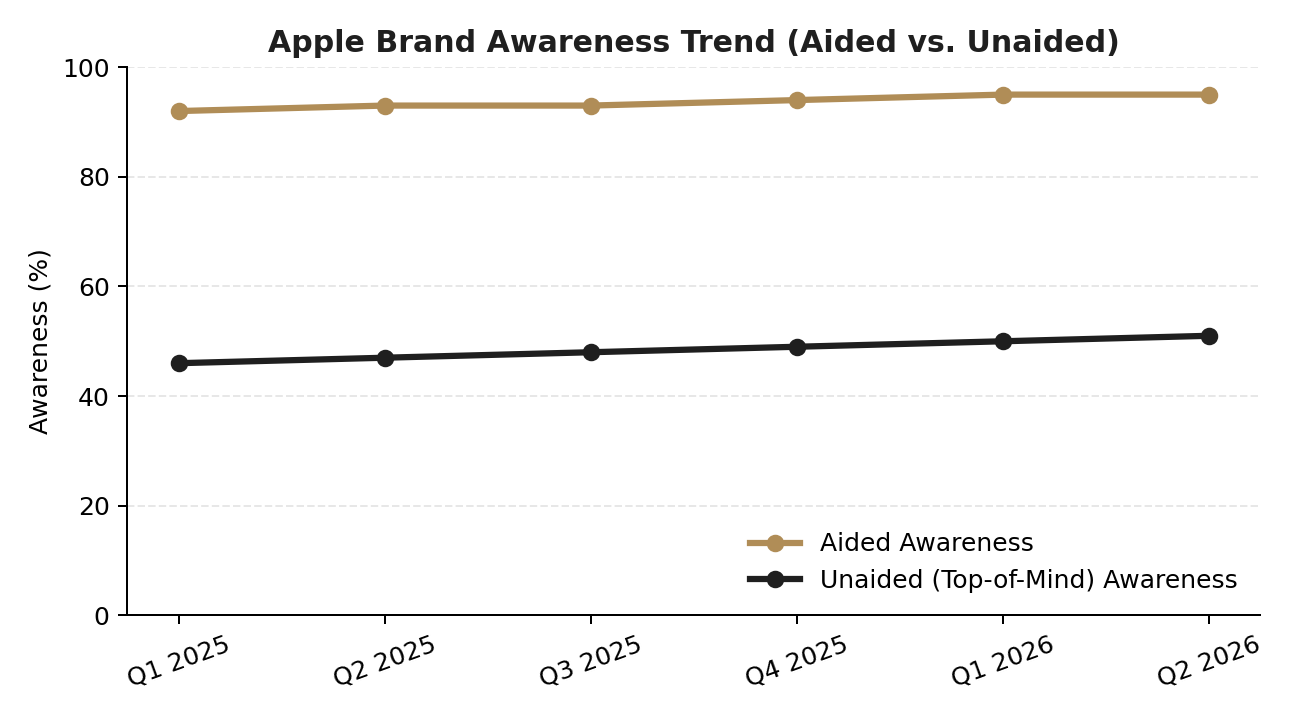
Figure 1: Apple brand awareness trend, aided vs. unaided (Q1 2025 - Q2 2026).
The steady widening of unaided awareness suggests that Apple's marketing and product-launch cadence including major event moments such as new iPhone and services announcements continues to reinforce top-of-mind salience even in a mature market where aided awareness has little room to grow further. The strategic priority going forward is sustaining this unaided trajectory rather than chasing incremental gains in an already-saturated aided metric.
When consumers are asked to name the first smartphone brand that comes to mind, Apple leads the category at 34% of first mentions, more than 12 percentage points ahead of its nearest competitor, Samsung, at 22%. Google, Xiaomi and OnePlus trail further behind, each capturing single-digit-to-low-double-digit shares of first-mention recall.
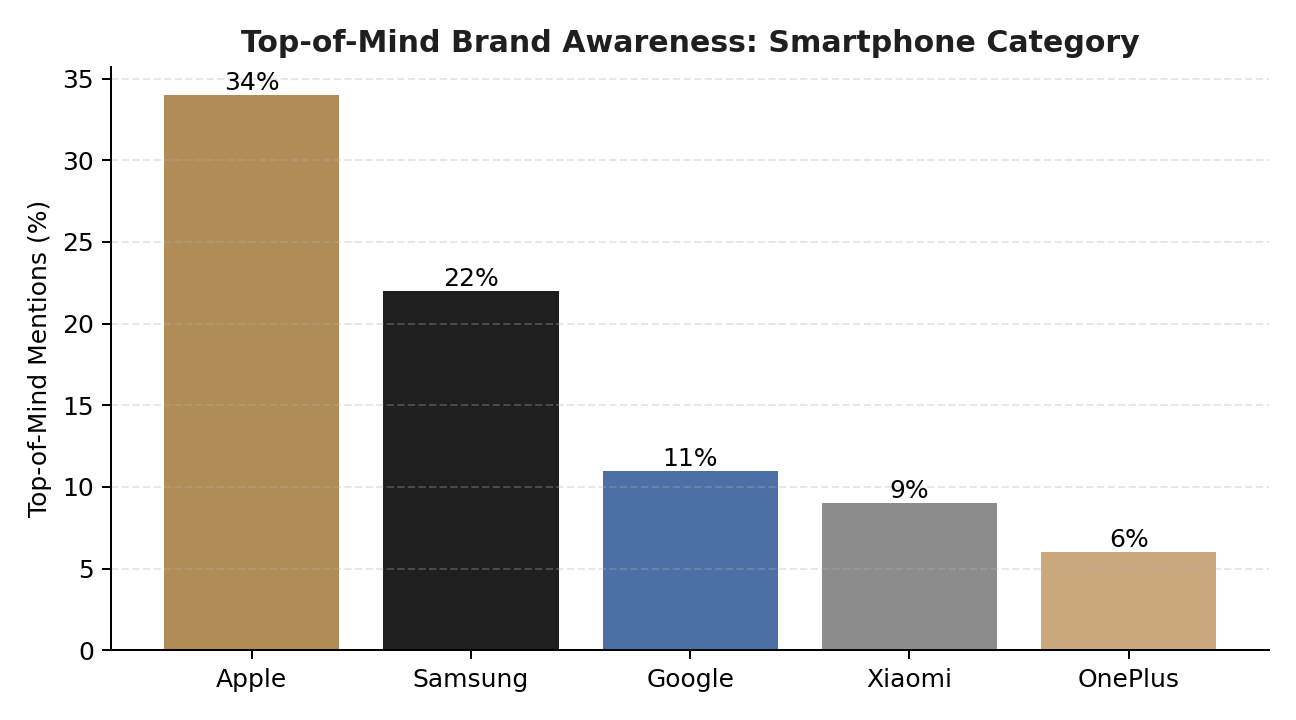
Figure 2: Top-of-mind brand awareness within the smartphone category, by brand.
This commanding top-of-mind position is a meaningful leading indicator of purchase consideration, since category entry-point brands the ones consumers think of first disproportionately make it into the final consideration set during a purchase decision. Apple's lead here is not just a function of market share but of sustained brand-building investment: distinctive product design language, a consistent visual identity across advertising, and a retail and event ecosystem (flagship stores, keynote launches) that keeps the brand visible between purchase cycles. Maintaining this lead will require continued differentiation as competitors, particularly Samsung, invest heavily in flagship marketing of their own.
Beyond simple recall, understanding how consumers perceive Apple across specific equity attributes reveals where the brand's strength is concentrated and where it is comparatively exposed. Apple scores strongest on Innovation (8.9/10) and Design (9.2/10), both well above the industry average of roughly 7.0-7.2, reinforcing the brand's core positioning as a premium, design-led technology leader. Quality (8.7/10) and Trust (8.3/10) similarly outperform category norms, suggesting that Apple's reputation for build quality and reliability continues to translate into strong consumer confidence.
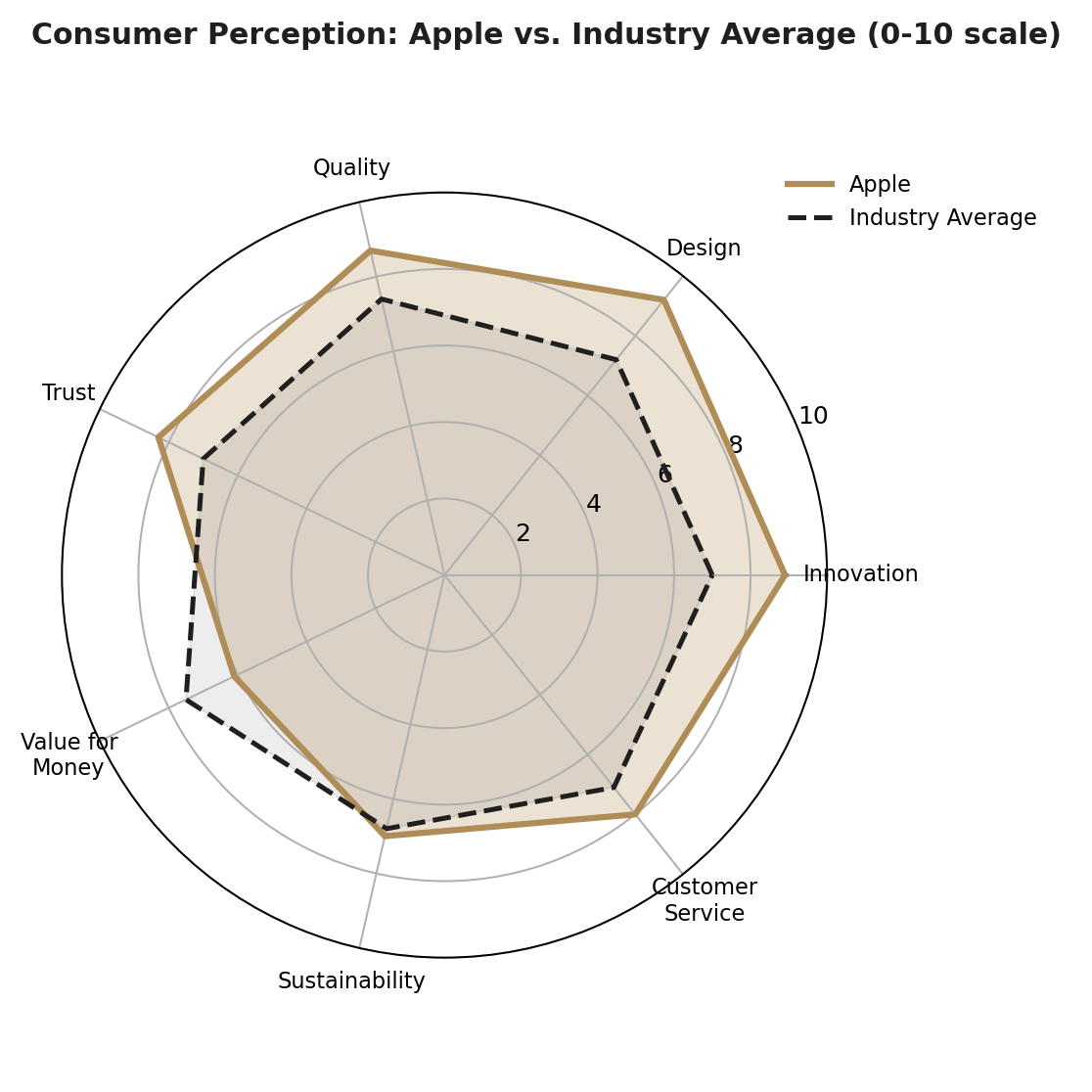
Figure 3: Consumer perception across seven brand equity attributes, Apple vs. industry average (0-10 scale).
The perception profile is less uniformly strong on two dimensions. Value for Money sits at 6.1, below the industry average of 7.5 an expected trade-off for a premium-priced brand, but one worth monitoring given rising price sensitivity in several markets and increasingly capable mid-range competitors from Xiaomi and OnePlus. Sustainability perception, at 7.0, sits closer to but still slightly below the category average of 6.8, indicating the metric is not currently a differentiator despite Apple's public environmental commitments; this suggests a gap between the brand's actual sustainability initiatives and how well those initiatives are registering with the average consumer. Customer Service (8.0) remains a solid, above-average asset, consistent with Apple's investment in retail and support infrastructure through the Apple Store and Genius Bar network.
Taken together, the perception data confirms that Apple's brand equity is built primarily on product-level attributes innovation, design and quality rather than price-value positioning. This is a coherent and defensible strategy for a premium brand, but it does mean that any erosion in perceived innovation or design leadership would carry outsized risk, since Apple has comparatively little equity cushion on the value dimension to fall back on.
Apple's Net Promoter Score has risen consistently over the tracking period, from 61 in Q1 2025 to 70 in Q2 2026 a nine-point improvement that places the brand well ahead of the consumer electronics industry benchmark, which typically ranges between 30 and 45. An NPS in the high 60s to 70 range is considered exceptional for a hardware-led technology brand and reflects strong post-purchase satisfaction and advocacy behavior among the Apple customer base.
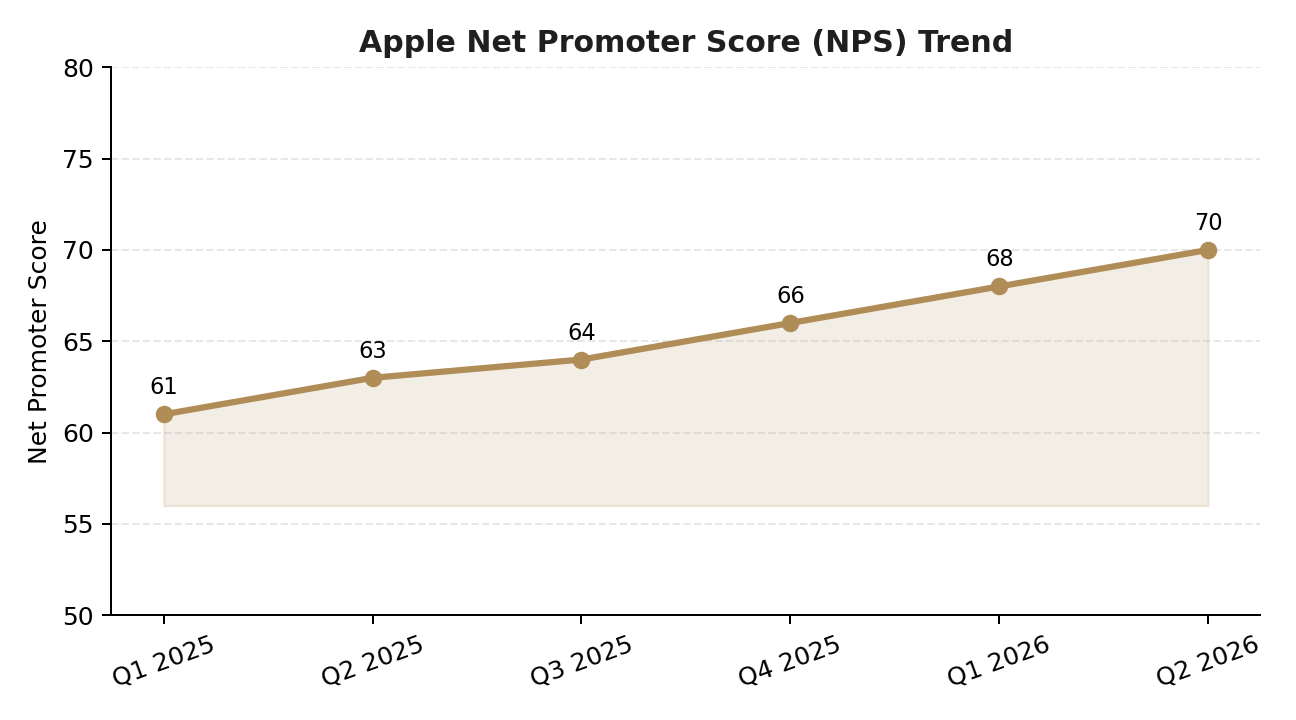
Figure 4: Apple Net Promoter Score trend, Q1 2025 - Q2 2026.
Breaking the respondent base into the standard Promoter, Passive and Detractor segments shows Promoters at 72% of respondents, Passives at 20%, and Detractors at just 8%, underscoring a customer base that is not merely satisfied but actively advocating for the brand a critical driver of organic acquisition through word-of-mouth and peer recommendation, both of which are particularly influential in premium technology purchase decisions.
Figure 5: NPS by region and overall
Regional analysis reveals meaningful variation. North America posts the strongest regional NPS at 74, followed by Europe at 68 and Asia Pacific at 65. Greater China lags the rest of the portfolio at 58, consistent with well-documented competitive pressure in that market from strong domestic players such as Huawei and Xiaomi, alongside broader macroeconomic and geopolitical headwinds affecting premium consumer spending. Latin America sits at 60, reflecting a market where Apple's premium pricing continues to constrain penetration relative to more price-accessible Android competitors. The China gap in particular represents the most significant regional brand health risk in the current tracking wave and warrants continued monitoring, as it is the one region where advocacy levels trail meaningfully behind the global average.
Viewed alongside the awareness and perception data, the NPS results reinforce a consistent narrative: Apple's brand health is defined by exceptional loyalty and advocacy among its existing customer base, category-leading top-of-mind salience, and product-attribute perception scores that outpace the industry on innovation, design and quality. The comparatively softer scores on value for money and sustainability, together with regional softness in Greater China, represent the clearest areas where competitors could erode share if left unaddressed, but they do not currently threaten the brand's overall leadership position.
Samsung remains Apple's most direct global competitor, trailing on top-of-mind recall but narrowing the perception gap on value for money through aggressive flagship pricing and trade-in incentives. Google's position is smaller in scale but notable for gains in the AI and software-integration narrative, an area increasingly relevant to how consumers evaluate 'innovation' as a brand attribute. Xiaomi and OnePlus compete primarily on the value dimension, and their growth in emerging markets should be read as a signal that Apple's premium positioning, while durable, is not immune to share erosion in price-sensitive segments over a multi-year horizon.
Brand health is rarely uniform across a customer base, and Apple's tracking data shows some divergence by age cohort. Among respondents aged 18-24, unaided awareness and top-of-mind recall both run several points above the overall average, and perception scores for Design and Innovation are the highest of any age group consistent with Apple's continued strength in capturing first-time smartphone buyers and younger consumers for whom the brand carries social and status signaling value. NPS among this cohort is slightly more volatile quarter to quarter than the overall average, which is typical of a segment with less-established brand loyalty and greater price sensitivity relative to income.
Respondents aged 45 and older show a different pattern: awareness metrics are comparably strong, but perception scores for Value for Money and Sustainability trail the youngest cohort by a wider margin, while Trust and Customer Service score higher than among younger respondents. This suggests that older, longer-tenured customers value reliability and service quality more heavily in their overall brand evaluation, while younger consumers weight design and innovation more heavily a distinction with direct implications for how marketing messaging should be tailored by audience segment rather than treated as one uniform brand narrative.
As noted at the outset, the figures in this report are illustrative and intended to demonstrate the structure and depth of a brand health tracking deliverable rather than to represent verified, fielded research. A production-grade version of this report would require a statistically representative sample per market (typically n=300-500 per country per wave), a validated questionnaire instrument, and a consistent panel or intercept methodology to ensure wave-over-wave comparability. It would also benefit from qualitative follow-up such as open-ended verbatim coding on the drivers of Detractor responses to explain not just the size of the value-for-money and sustainability perception gaps, but their underlying causes.
Recommended next steps for an actual tracking program include establishing a consistent quarterly fielding calendar, expanding the competitive set to include category adjacents relevant to Apple's ecosystem strategy (wearables, services, and AI assistants), and layering purchase-funnel metrics consideration, intent and recent purchase onto the existing awareness, perception and NPS pillars to build a complete view from salience through to conversion and advocacy.
Apple's brand health, as measured across awareness, perception and advocacy metrics, remains among the strongest in the global technology sector. The brand's unaided awareness and top-of-mind lead continue to strengthen, its perception profile is anchored by genuine attribute leadership in innovation and design, and its Net Promoter Score trend reflects a customer base with high satisfaction and strong advocacy intent. The principal watch-points for the next tracking cycle are the value-for-money perception gap relative to industry norms, underdeveloped sustainability perception relative to actual initiative investment, and the comparatively softer brand health readings in Greater China. None of these currently represent an acute threat to Apple's market position, but each merits continued monitoring and targeted response as competitive and macroeconomic conditions evolve.