
Singapore Semiconductor Value Chain: From IC Design and Wafer Fabrication to Advanced Packaging
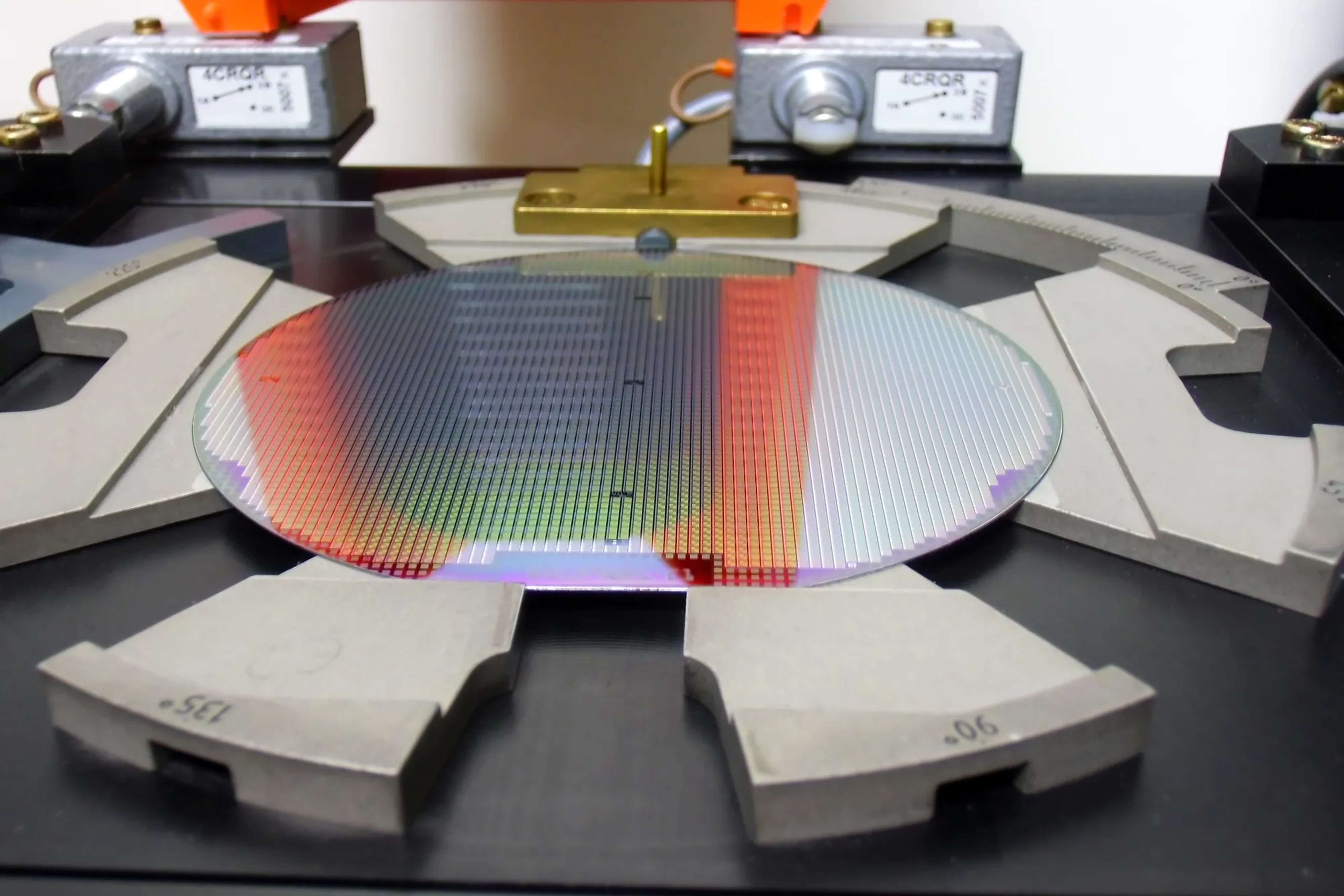
Most countries that compete in semiconductors specialise in one or two stages of the value chain. Some focus on chip design, others on wafer fabrication, and many on assembly and testing. The Singapore semiconductor industry stands out because it is active across nearly every stage, from IC design and wafer fabrication to assembly, test, advanced packaging, equipment manufacturing and specialty materials. That breadth has turned a small island into one of the most important nodes in the global chip supply chain.
This blog walks through each stage of the Singapore semiconductor industry value chain, explains who the key players are and where value is created, and highlights the pressure points that will shape its development. The analysis draws on Epignosis Insights' latest research into Singapore's semiconductor manufacturing, capacity and investment landscape.
One Island, Every Link: The Value Chain at a Glance
The Singapore semiconductor industry can be understood as four connected stages supported by a set of enablers. Chips are designed, fabricated on wafers, assembled, tested and packaged, and then shipped to customers in AI, automotive, communications and consumer markets. Equipment makers, materials suppliers and research institutes support every stage, which gives manufacturers access to tools, substrates and technical know-how close to their production lines.
Figure 1: The Singapore semiconductor industry value chain
This integration matters commercially. When design centres, fabs, packaging lines and equipment suppliers operate near one another, companies can resolve technical problems faster, qualify new products more quickly and reduce logistics risk. For customers, it means the Singapore semiconductor industry can support a product from early development through to volume shipment without the chip having to travel across multiple countries.
Stage 1 – IC Design: Where Every Chip Begins
Chip design is the first and often the most knowledge-intensive stage of the Singapore semiconductor industry value chain. Design teams define a chip's architecture, verify how it will perform and prepare the data needed for manufacturing. Several of the world's leading chip designers, including AMD, Broadcom, MediaTek, Marvell Technology, NVIDIA and Qualcomm, have a presence in Singapore, ranging from regional offices to engineering and operations centres.
Automotive design is a notable strength. According to the Economic Development Board (EDB), one in two new cars worldwide uses Infineon microcontroller units designed and tested in Singapore. This shows how design work in the Singapore semiconductor industry is closely tied to local testing and manufacturing capability, which is especially valuable in automotive markets where reliability and long product lifecycles are critical.
Stage 2 – Wafer Fabrication: The Foundry Engine Room
Wafer fabrication is the most capital-intensive stage of the Singapore semiconductor industry. Here, circuits are built layer by layer on silicon wafers in cleanrooms using hundreds of process steps. Singapore hosts a mix of foundries and memory manufacturers, including GlobalFoundries, United Microelectronics Corporation (UMC), Systems on Silicon Manufacturing Company (SSMC), the new VisionPower Semiconductor Manufacturing Company (VSMC) and Micron.
Specialty Nodes, Not Just the Leading Edge
Rather than chasing the smallest process nodes, much of the Singapore semiconductor industry focuses on specialty and mature technologies that are essential for automotive, industrial, 5G and IoT products. UMC's new Pasir Ris facility, for example, is built around 22nm and 28nm specialty processes and is scheduled to enter volume production in 2026 at up to 30,000 wafers per month. That will take UMC's total Singapore capacity above 1 million wafers a year.
New capacity is being added elsewhere too. VSMC, the joint venture between Vanguard International Semiconductor and NXP Semiconductors, is building a 300mm fab that is expected to begin initial production in 2027 and reach 55,000 wafers per month by 2029. GlobalFoundries' expansion has lifted its Singapore capacity to around 1.5 million 300mm wafers a year. Together, these projects reinforce the Singapore semiconductor industry's role as a reliable source of specialty wafer output.
Stage 3 – Materials and Substrates: The Quiet Foundation
Every chip starts with a substrate, and the Singapore semiconductor industry has built capability in this upstream segment as well. Soitec's expansion has increased its Singapore production capability to approximately 2 million 300mm silicon-on-insulator (SOI) wafers a year. SOI substrates are used in chips for smartphones, vehicles and smart devices, where they help improve performance and reduce power consumption.
Local substrate supply reduces dependence on long-distance shipments for a critical input and strengthens links between materials suppliers and fabs. As demand grows for RF, automotive and low-power chips, specialty substrates are likely to become an even more important part of the Singapore semiconductor industry value chain.
Stage 4 – Assembly, Test and Advanced Packaging: Where AI Raises the Stakes
After fabrication, wafers are diced into individual chips, assembled into packages and tested before shipment. This back-end stage has long been a core strength of the Singapore semiconductor industry, and AI is now making it more valuable. Advanced packaging technologies such as high-bandwidth memory (HBM), chiplets, 2.5D/3D integration and heterogeneous integration combine multiple dies into a single high-performance package, improving computing power, memory bandwidth and energy efficiency.
The flagship project in this segment is Micron's HBM advanced packaging facility, which broke ground in January 2025 with an investment of approximately US$7 billion. The facility is scheduled to begin operations in 2026 and is expected to create around 1,400 jobs initially, with the potential to grow to about 3,000. It links memory production directly with packaging and testing, adding a high-value step to the Singapore semiconductor industry within the same geography.
The Hidden Backbone: Equipment Manufacturing
Behind every fab and packaging line are the tools that make production possible. Singapore accounts for approximately 20% of global semiconductor equipment production, which makes equipment one of the most important but least visible parts of the Singapore semiconductor industry. Major equipment makers analysed in Epignosis Insights' research include Applied Materials, Lam Research, KLA Corporation, ASML, Tokyo Electron and ASM International.
Several of these companies continue to invest. Applied Materials opened a US$500 million Tampines Campus in 2026 that more than doubles its cleanroom capacity in Singapore, while KLA is investing US$200 million in a new manufacturing facility. Singapore is also a leading base for back-end equipment makers, which supply tools for assembly, bonding and packaging. This concentration of toolmaking gives the Singapore semiconductor industry a strategic role that extends well beyond its own fabs.
Following the Money: Where Value Is Created
The value chain's economic impact is substantial. According to Singapore's Department of Statistics, the Singapore semiconductor industry generated S$60.3 billion in value added in 2022, making it the dominant contributor within the electronics cluster. Semiconductors' share of nominal value added in the cluster rose from 45.6% in 2000 to 80.2% in 2025, while semiconductor value added grew at a 7.3% CAGR over the same period.
Figure 2: Semiconductors' share of electronics-cluster nominal value added, 2000 vs 2025
The product mix is also broad. Memory holds the largest estimated share of the Singapore semiconductor industry by type at 28%, followed by logic at 18%, microprocessors and microcontrollers at 10%, analog at 9% and power semiconductors at 8%. Discrete devices, sensors and MEMS, optoelectronics and photonics, and RF and wireless chips make up the rest, giving the country exposure to several technology cycles rather than a single product category.
Figure 3: Singapore semiconductor industry – estimated market share by type
Exports are the final link in the chain. About 98% of the Singapore semiconductor industry's value added in 2022 was derived from exports, and Singapore exported approximately US$119.23 billion of HS 8542 integrated circuits in 2024. Hong Kong and mainland China were the largest destinations, together accounting for close to half of these shipments, followed by Malaysia, Thailand, Vietnam and South Korea.
Lab to Fab: R&D and Next-Generation Capabilities
Research and development connect the value chain to future technologies. The Singapore semiconductor industry is building domestic R&D and translation capacity through a S$500 million national fabrication facility targeted for availability by 2027. The facility is designed to help companies and researchers move new semiconductor technologies from the laboratory to pilot production more quickly.
Singapore also has research and pilot-production capabilities in silicon carbide (SiC) and gallium nitride (GaN) power semiconductors, which are important for electric vehicles and energy-efficient power systems. Sensors and MEMS receive support through the Lab-in-Fab ecosystem, and photonics benefits from ongoing advanced R&D. These capabilities help the Singapore semiconductor industry prepare for technology shifts that will define the next decade.
Why an Integrated Model Attracts Global Players
For multinational chip companies, the Singapore semiconductor industry offers a way to reduce supply-chain risk without losing access to specialised capabilities. A company can design a product regionally, fabricate it at a local foundry, package and test it nearby, and source tools and substrates from suppliers operating in the same industrial parks. This shortens qualification cycles and makes it easier to respond when customers change specifications or volumes.
The integrated model also supports supply-chain diversification. As customers seek to spread production across more locations, the Singapore semiconductor industry provides a stable, well-regulated base with established infrastructure, strong intellectual property protection and deep links to regional Asian markets. These qualities help explain why new projects continue to arrive, even as competition for semiconductor investment intensifies worldwide.
Finally, the model creates compounding benefits. Each new fab or packaging line increases demand for equipment, materials, maintenance and engineering services, which in turn attracts more suppliers. Over time, this cycle deepens the Singapore semiconductor industry ecosystem and makes it harder for other locations to replicate the same combination of capabilities.
Weak Links and Pressure Points
A broad value chain also brings exposure to several risks. High capital and operating costs are a constant concern, as fabs and packaging lines need large investments in cleanrooms, tools and automation. Land, electricity and water are limited resources in a compact city-state, and the Singapore semiconductor industry must manage them carefully as facilities become larger and more energy-intensive.
Talent is another pressure point. With more than 35,000 people directly employed, the Singapore semiconductor industry competes globally for process engineers, equipment specialists and packaging experts. Its heavy export dependence also means that changes in global electronics demand, inventory cycles and trade restrictions can quickly affect output. Managing these risks will be key to keeping every link in the chain competitive.
Conclusion: Strength in Breadth
The Singapore semiconductor industry is defined by breadth. From IC design and specialty wafer fabrication to substrates, equipment, advanced packaging and exports, Singapore participates in almost every stage of the semiconductor value chain. As AI raises the importance of packaging and automotive demand lifts specialty chips, this integrated model gives the country a strong base for the next decade, provided it continues to invest in talent, resources and new technologies.