Why Brands Lose Market Share Even When Sales Are Growing: The Hidden Signals Brand Tracking Reveals
Business leaders often herald rising sales as an indicator of a strong brand. However, history has shown that revenue growth can sometimes obscure deeper issues related to consumer perception. Companies may boost sales through various strategies such as price promotions, broader distribution, acquisitions, or short-term market demand, all the while risking a decline in brand relevance, customer preference, and competitive differentiation. These underlying weaknesses tend to emerge later as declining profit margins, waning customer loyalty, and diminishing market share once the external factors driving growth begin to fade.
This disconnect has become increasingly prevalent as consumers evaluate brands across various digital platforms before making purchase decisions. A company might announce record quarterly sales, yet if its brand consideration, trust, and emotional connection with customers are weakening, competitors are likely to start capturing future demand. This highlights the importance of continuous brand tracking as a strategic tool for decision-making, rather than merely a marketing task. It allows organizations to identify subtle changes in consumer perception well before financial reports reflect the impact of these shifts.
Why Sales Growth Can Create a False Sense of Brand Strength
Sales performance is influenced by various short-term factors that often have minimal impact on long-term brand equity. Elements such as price discounts, promotional campaigns, retail expansion, seasonal fluctuations, and favorable economic conditions can lead to temporary spikes in revenue while failing to bolster consumer loyalty.
For example, when a consumer electronics manufacturer rolls out aggressive cashback offers, they may see unit sales increase by 20%. However, customers might still view competing brands as more innovative or reliable. Once these promotional incentives are removed, consumers typically return to their preferred brands, as their underlying perceptions remain unchanged.
Brand tracking is essential for differentiating between short-term transactional growth and sustainable brand growth. By continuously assessing customer sentiment and perceptions towards a brand, businesses can gain valuable insights beyond mere sales data.
Key Drivers Behind Temporary Sales Growth
- Promotional pricing and discounts
- Distribution expansion into new markets
- Seasonal purchasing behavior
- New product launches
- Short-term advertising campaigns
- Economic recovery or increased consumer spending
None of these factors necessarily indicate stronger brand equity.
Hidden Brand Signals That Predict Future Market Share Decline
Brand tracking measures consumer attitudes that traditional sales reports cannot capture. These indicators often begin changing several quarters before revenue declines become visible.
Declining Brand Consideration Despite Stable Awareness
Many organizations focus heavily on awareness metrics because they are easy to improve through advertising investment. However, awareness alone rarely predicts purchasing behavior.
A brand may remain highly recognizable while consumers increasingly consider competitors during purchase decisions. This widening gap between awareness and consideration often represents the earliest warning sign of future market share erosion.
Continuous tracking allows companies to identify whether awareness campaigns are translating into genuine purchase intent or merely maintaining visibility.
Weakening Emotional Connection
Consumers increasingly make decisions based on trust, authenticity, sustainability, convenience, and shared values rather than functional product attributes alone.
When emotional affinity declines, customers become significantly more price-sensitive and more willing to switch brands, even if satisfaction levels remain acceptable.
Tracking emotional metrics helps companies understand whether their brand continues to occupy a meaningful place in customers' lives.
Reduced Brand Preference Within High-Value Customer Segments
Aggregate sales figures often conceal changing dynamics within profitable customer groups.
Brand tracking segmented by demographics, income levels, purchase frequency, or industry reveals whether premium customers are migrating toward competitors while lower-value customers temporarily sustain revenue growth.
This insight enables targeted intervention before valuable customer segments are permanently lost.
Brand Health Metrics That Reveal Hidden Risks
Organizations implementing mature brand tracking programs monitor multiple indicators simultaneously rather than relying on isolated KPIs.
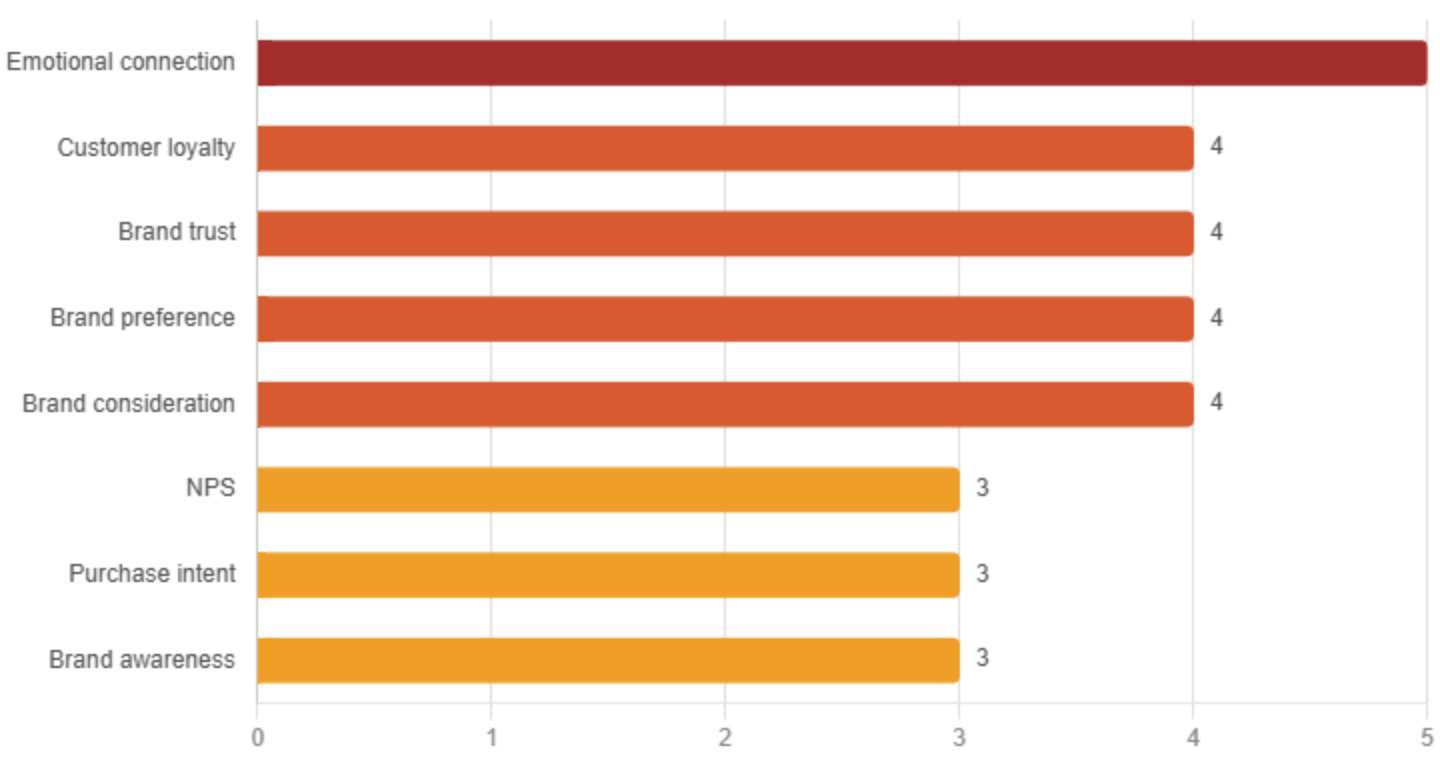
No single metric provides a complete picture. The greatest value comes from analyzing relationships among these indicators over time.
What Industry Research Reveals About Brand Performance
Recent global research highlights why leading organizations invest heavily in continuous brand measurement rather than relying solely on financial KPIs.
|
Industry Finding |
Business Implication |
| Approximately 95% of purchasing decisions occur subconsciously (Institute of Practitioners in Advertising, building on behavioral science research) | Emotional brand perception significantly influences buying behavior. |
| Brands with strong emotional engagement can outperform competitors in customer lifetime value and loyalty according to multiple longitudinal marketing studies. | Emotional metrics should complement transactional KPIs. |
| Consistent branding across channels has been associated with revenue improvements of 10–20% in several marketing effectiveness studies. | Brand consistency directly impacts commercial performance. |
| Acquiring a new customer typically costs 5–7 times more than retaining an existing one (widely cited marketing benchmark). | Declining loyalty increases long-term acquisition costs. |
| Consumers increasingly research products across multiple digital touchpoints before purchasing. | Continuous monitoring is necessary to capture rapidly changing perceptions. |
How Continuous Brand Tracking Creates Competitive Advantage
Unlike annual perception studies, continuous tracking identifies changes while organizations still have time to respond.
Detect Competitive Encroachment Early
Competitors often gain momentum in consideration and preference months before measurable market share shifts occur.
Brand tracking identifies these competitive movements early enough to adjust messaging, pricing, customer experience, or product positioning before revenue is affected.
Measure Campaign Effectiveness Beyond Awareness
Marketing campaigns frequently generate impressive reach metrics without influencing consumer behavior.
Continuous tracking evaluates whether advertising improves trust, preference, recommendation, and purchase intent instead of merely increasing visibility.
This provides a more meaningful assessment of marketing ROI.
Understand Changing Consumer Expectations
Consumer priorities evolve rapidly due to technological innovation, sustainability concerns, inflation, and changing lifestyles.
Brand tracking identifies emerging expectations before they become mainstream, allowing organizations to reposition proactively rather than react defensively.
Turning Brand Signals into Strategic Decisions
The most effective organizations integrate brand tracking into executive decision-making rather than treating it as a periodic research exercise. Sales dashboards explain what has already happened, while brand tracking explains why it happened and, more importantly, what is likely to happen next.
When declining consideration coincides with stable awareness, leadership may refine positioning instead of increasing advertising spend. Falling trust scores may prompt investments in customer experience, product quality, or transparency initiatives. Reduced preference among premium segments could lead to targeted retention programs rather than broad discounting that weakens margins.
These proactive interventions are only possible when perception data is monitored continuously rather than reviewed retrospectively.
Conclusion
Growing sales should never be interpreted as definitive evidence of a healthy brand. Revenue reflects current transactions, whereas brand strength determines future demand. Companies that focus exclusively on financial performance often overlook subtle changes in consumer attitudes until declining market share becomes difficult and expensive to reverse.
Continuous brand tracking bridges this visibility gap by monitoring awareness, consideration, trust, emotional connection, preference, loyalty, and purchase intent together. These metrics reveal emerging competitive threats, changing customer expectations, and weakening brand equity well before sales begin to decline. Organizations that combine commercial performance data with ongoing brand intelligence are better positioned to protect market share, allocate marketing investments effectively, and build sustainable long-term growth in increasingly competitive markets.