
Why Gallium Nitride Is Becoming the Strategic Foundation for AI Data Centers, EV Power Electronics, and Next-Generation Connectivity
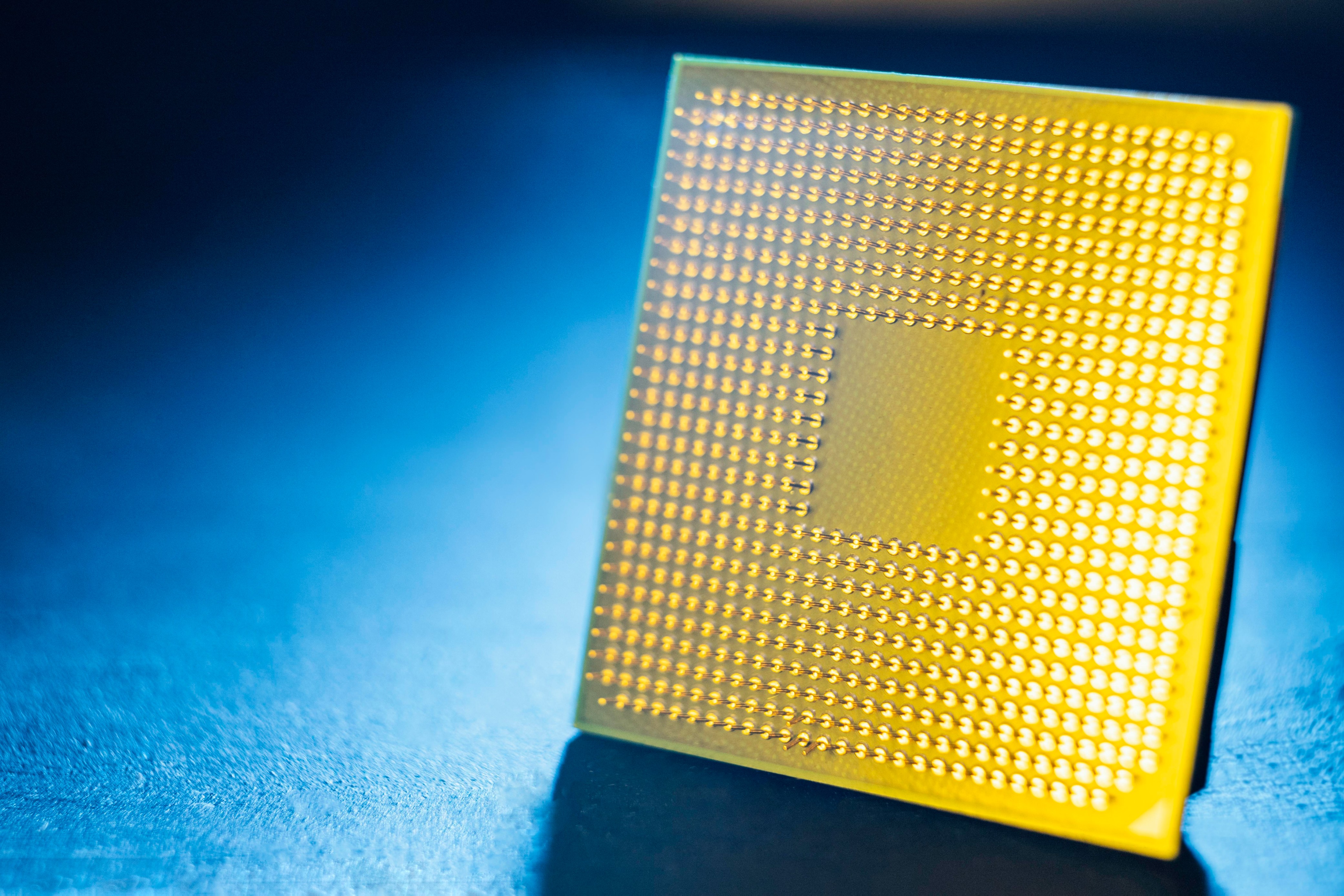
Three unrelated industries AI infrastructure, electric mobility, and wireless networks are converging on the same material for very different reasons, and that convergence is the real story behind the Global gallium nitride semiconductor market. AI data centers need to move more power through less copper without melting a rack. EV makers need onboard chargers that shed weight without shedding range. 5G and emerging 6G networks need amplifiers that stay efficient at frequencies silicon was never built for. Gallium nitride solves all three problems with the same underlying physics, and that is precisely why capital is flooding into it: the Global gallium nitride semiconductor market grew from an estimated $9.2 billion in 2024 to a projected $89 billion by 2033, a 27.2% compound annual growth rate that few semiconductor subsectors are matching right now.
The Physics That Makes GaN Strategic, Not Just Faster
Gann’s advantage isn't marketing it’s a genuine materials-science gap. Gallium nitride carries a bandgap of roughly 3.4 eV against silicon's 1.2 eV, which lets it sustain far higher electric fields in a much thinner layer. The practical result is a transistor that switches around 100 times faster than its silicon equivalent while shedding less energy as heat. For any company chasing power density and every segment touched by the
Global gallium nitride semiconductor market is chasing power density right now that single property cascades into smaller chargers, lighter inverters, and power supplies that fit in tighter thermal envelopes than silicon could ever manage.
AI Data Centers: The Newest and Fastest-Growing Buyer
Until recently, GaN's home was RF and consumer chargers. That's changed. Infineon's CoolGaN integrated power stages, purpose-built for AI data center power supplies, now push efficiency levels above 99% while cutting server rack power consumption a meaningful number when a single AI rack can draw as much electricity as a small building. NVIDIA's move toward 800V high-voltage DC architectures for next-generation server racks has pulled Texas Instruments, Navitas, Infineon, and Innoscience into direct collaboration on GaN-based power delivery, with commercial products expected around 2027.
Electric Vehicles: Power Density You Can Feel in the Range Number
Automotive is where GaN moves from "nice efficiency gain" to a specification EV engineers actively design around. Onboard chargers, DC-DC converters, and traction inverters all benefit from GaN's ability to switch faster with less resistive loss, which translates directly into smaller components and, ultimately, more usable battery capacity for the same vehicle weight. That's why the automotive vertical is one of the structural growth pillars cited across nearly every recent read of the Global gallium nitride semiconductor market Infineon has qualified a 100V automotive-grade CoolGaN family specifically for power conversion and Class D audio systems, while Chinese suppliers have signed joint-lab agreements with automakers to co-develop GaN-based new-energy-vehicle power electronics platforms.
Connectivity: The Original GaN Use Case Is Still Compounding
RF and telecom infrastructure were GaN's first serious commercial market, and they haven't slowed down if anything, 5G densification and early 6G research have added urgency.
Qorvo expanded its GaN RF portfolio in February 2026 specifically for 5G base stations and satellite communications, and Wolfspeed completed a new 200mm GaN-on-SiC wafer fabrication facility in 2025 to meet surging demand from 5G and defense customers simultaneously. This dual civilian-and-defense demand is a distinguishing feature of the connectivity segment within the Global gallium nitride semiconductor market: unlike consumer electronics, RF GaN demand doesn't cool off with a single product cycle, because base station build-outs and defense procurement run on multi-year contracts.
What's Still Holding the Market Back
- Manufacturing cost remains structurally higher than silicon defect-free epitaxial wafer production is capital-intensive, and this cost pressure runs through nearly every segment analysis of the Global gallium nitride semiconductor market.
- Supply is concentrated: a small number of foundries (TSMC, Innoscience, and a handful of IDMs) still account for the large majority of commercial GaN wafer output.
- The wafer-size transition from 6-inch to 8-inch GaN-on-silicon is underway but not complete, and yield consistency at the larger diameter is still being proven at scale.
The Bottom Line
What makes this moment different from GaN's earlier hype cycles is that the demand is now arriving from three directions at once instead of one. Consumer chargers proved the technology; RF and defense scaled the supply chain; now AI infrastructure and electric vehicles are pulling volume hard enough to justify the next generation of fabrication capacity. That triple-front demand is the real reason forecasts for the Global gallium nitride semiconductor market keep getting revised upward rather than down, and it's why gallium nitride is increasingly discussed not as a niche power component but as infrastructure the strategic material sitting quietly underneath the AI buildout, the EV transition, and the next wireless standard all at once.